If Your Roof
Drips Line Up Under a Screw Row
Backed-out screws and cracked washers leak in a pattern that follows the purlins.
Start WithFastener Repair
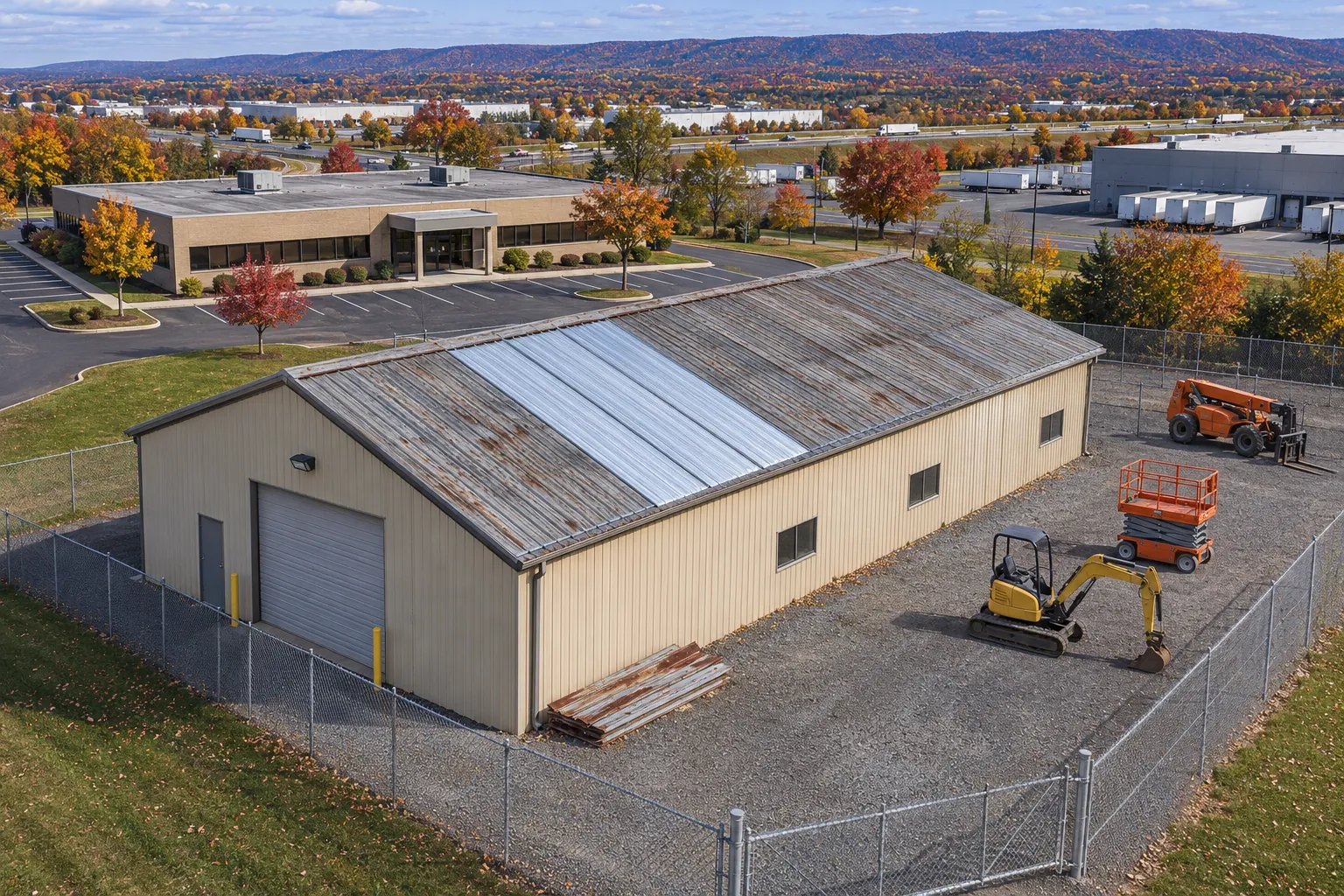
As an Allentown commercial metal roof repair contractor, we reset fasteners, close laps, swap rusted panels, and rebuild pipe flashings.
Allentown commercial metal roof repair fits most leaks on shops and plants. Compare your roof to these four situations first.
Backed-out screws and cracked washers leak in a pattern that follows the purlins.
End laps and side laps open as panels expand and shrink with each temperature swing.
A holed panel with firm neighbors gets swapped for a new one of the same profile.
Perforation and loose attachment across the roof point toward replacing the panels.
Exposed-fastener and standing-seam roofs around Allentown leak from five recurring details.
Washers dry out and crack, and screws back out as panels move. Water follows the screw shank into the purlin and drips some distance away.
Old sealant tape shrinks and the lap opens. Wind-driven rain and snowmelt then run under the upper panel.
Scratches, foot traffic, and pooled water start rust that eventually holes the panel, often near the low eave.
Rubber pipe boots split in the sun, and curb flashings tear where they meet the panel ribs.
Ice backs up at eave gutters and pushes water under the panel ends and closure strips.
Each method keeps the panels able to move, so the repair holds through hot summers and cold winters.
Loose screws come out, the hole and purlin are checked, and an oversized screw with a new washer goes in where the support allows.
Laps are opened, old sealant is cleaned off, and new butyl tape goes in before the lap is refastened. Standing seams are re-engaged where they have lifted.
Holed or badly rusted panels are removed and replaced with matching profiles, lapped and fastened into the panels on each side.
Split pipe boots are replaced with ones sized to the pipe and rib, and curb flashings are rebuilt with metal that follows the panel profile.
Surface rust near a repair is wire-brushed and primed so it stops spreading under the new work.
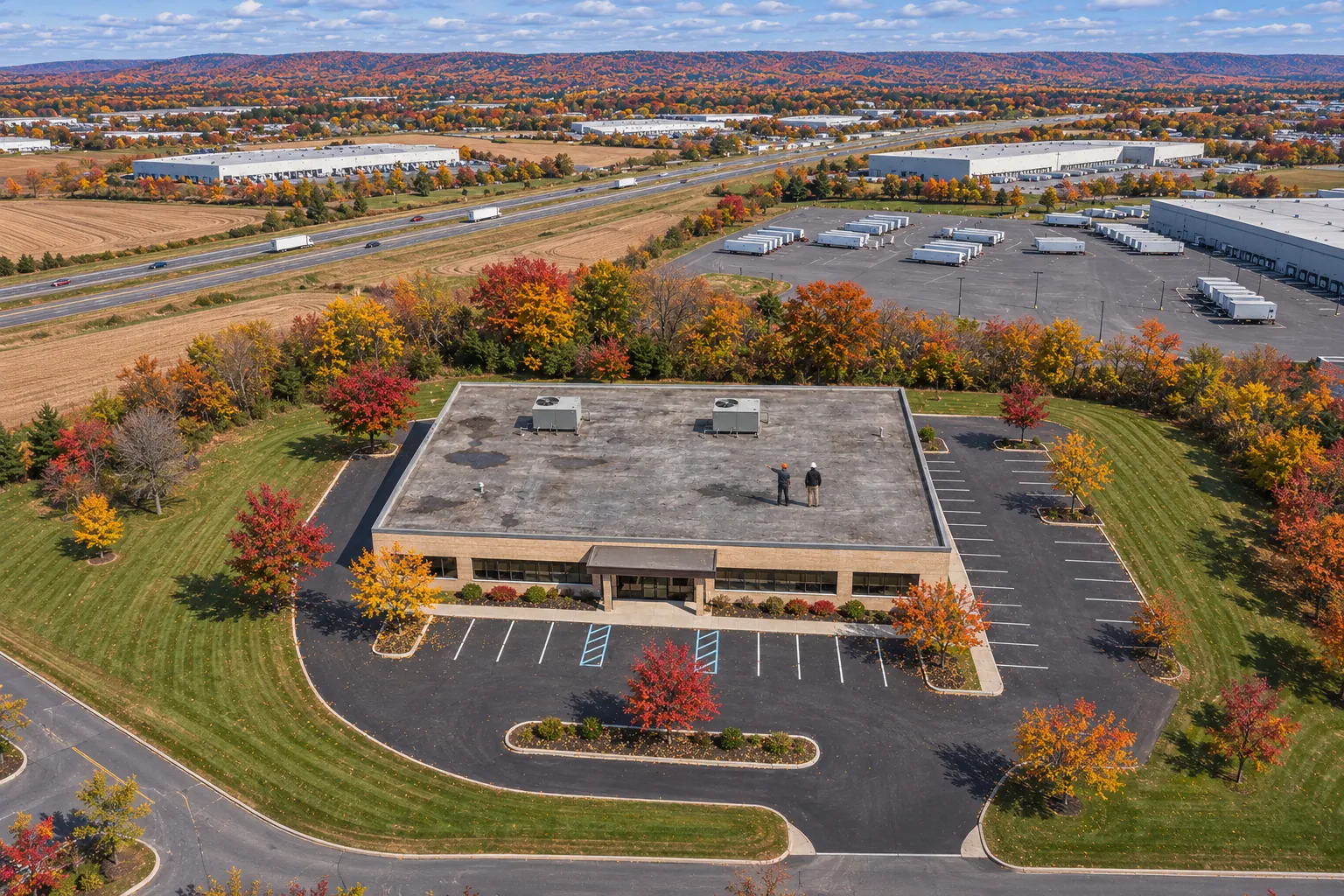
Fixing a metal roof at the failed details keeps working panels where they are.
Swaps cover only the panels that are holed, so the roof keeps its good sheets and its original layout.
Reset screws bite into solid purlins again, which stops the movement that tears washers and opens laps.
Panel and flashing repairs go section by section, so work and storage under the rest of the roof continue.
Each visit notes rust, laps, and supports across the roof, so you know which sections will need attention next.
Choose the option that matches your building today.
Call and tell us where the drips land and whether they line up with a purlin or a panel end.
Call UsSend the address and what you noticed on the panels. We inspect and write up the repair.
Get An EstimateThe same four stages on every exposed-fastener or standing-seam roof.
Walk the panels on safe footing, check screw rows, laps, flashings, and gutters, and photograph each problem. Interior drips are matched to the purlin or lap above.
Loose fasteners, open laps, and rust spots are marked on the roof and on a sketch, so the scope lists each one by location.
Screws are reset or upsized, laps resealed with new tape, holed panels replaced, and flashings rebuilt to fit the rib profile.
Repaired areas are rechecked and photographed. Your report lists what was fixed and what to watch on the rest of the roof.
Metal buildings often join flat roofs, house equipment, or show leaks that need tracing first.
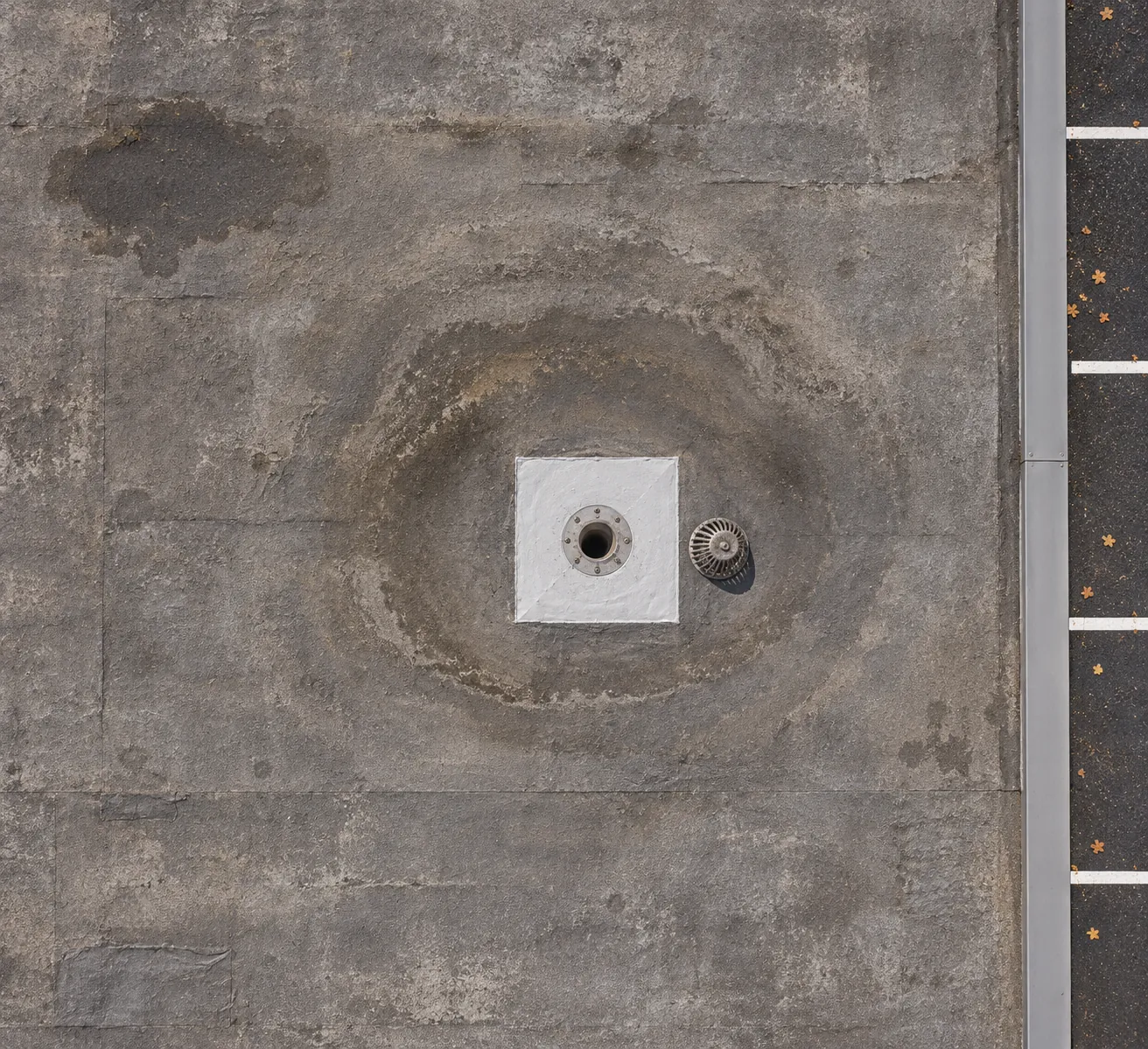
Low-slope office wings tied to a metal shop get membrane, drain, and seam repairs of their own.
Flat roof repair in Allentown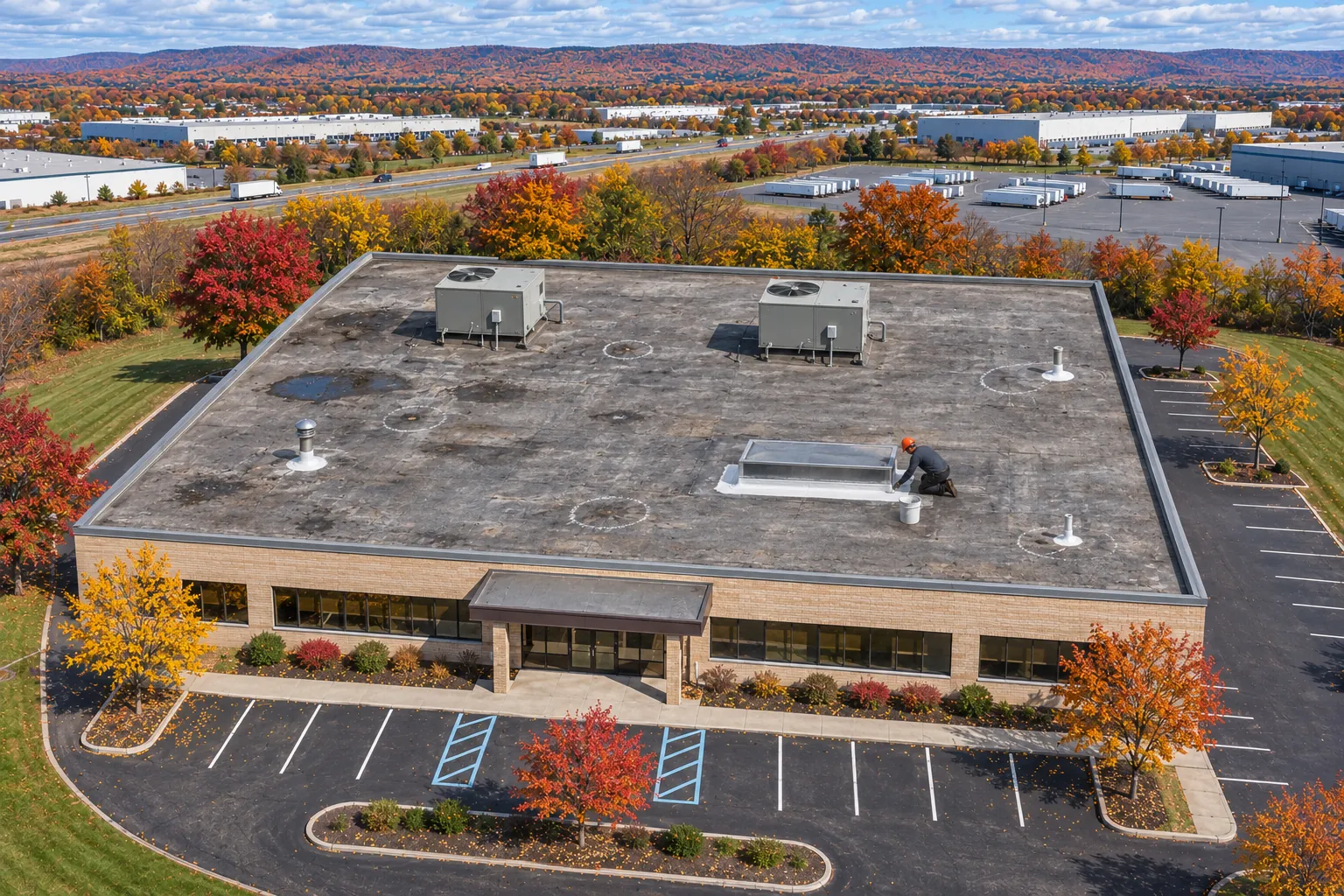
Drips that wander along purlins get traced to the true entry point before any panel work.
Roof leak repair in Allentown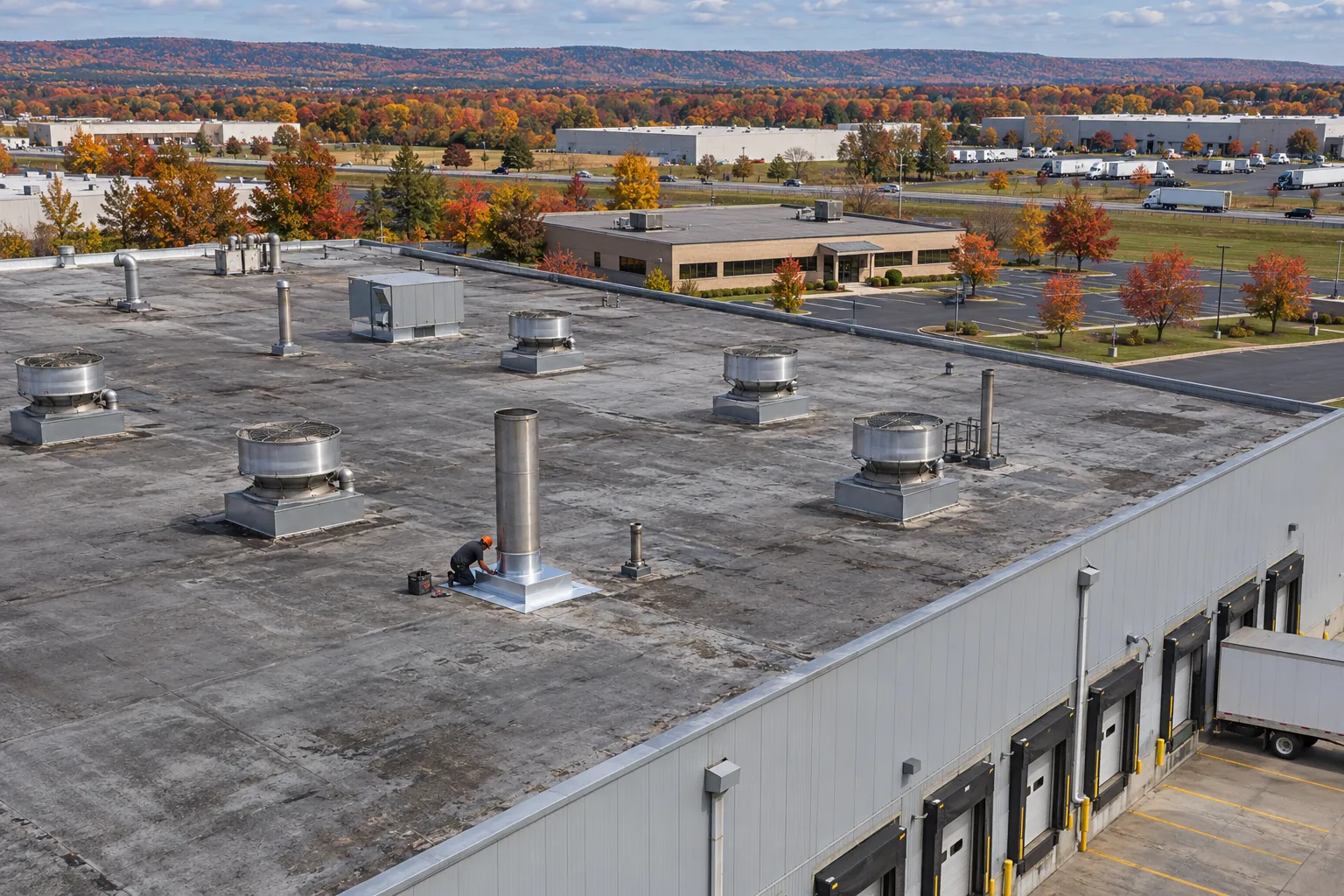
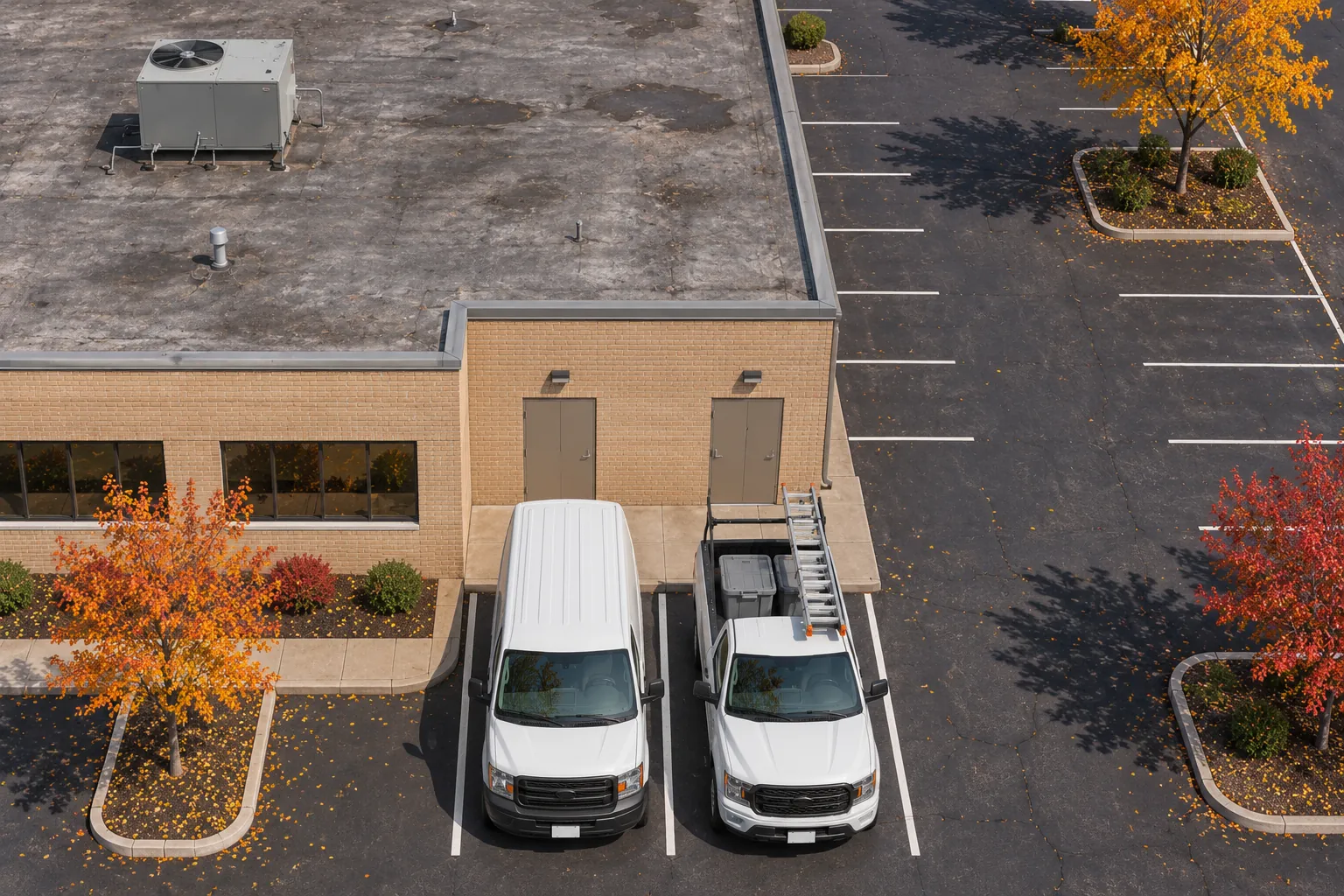
Metal plant roofs with exhaust fans and stacks get repairs planned around production.
Industrial roof repair in AllentownAnswers about seams, holes, flashings, and how long a repaired metal roof keeps working.
It should let the panels keep moving. We check how the panels engage, the fasteners nearby, and the old sealant, then rebuild the lap with tape and fasteners the system calls for. A stiff surface patch over a moving joint pushes the stress into the next connection.
Yes, when the panel around it and the supports below are in good shape. We check corrosion, attachment, and the laps beside it. If rust has spread past the hole, the repair becomes a panel swap, which still leaves the rest of the roof in place.
No single repair sets a number of years. We look at panel condition, supports, corrosion, and upkeep to explain what still works. A new flashing or fastener fixes its own detail, and other areas of the roof keep their own condition.
Sealant over a split or poorly fitted boot keeps peeling away as the panels move. A new boot sized to the pipe and shaped to the panel rib, fastened through its base, seals the opening and sheds runoff around it.
Rust depth, fastener hold, how laps were sealed, and how well water drains off the panels. Keeping gutters clear and checking screw rows after heavy winters slows wear, and our inspection notes show which sections are aging fastest.
Walking panels takes care. Step only along purlin lines, avoid wet or frosty panels, and stay off translucent skylight sheets entirely. For a steep or high roof, call us instead; we bring fall protection and check the panels from safe footing.
Tell us where the drips land under your metal roof. We trace them to the screws, laps, or flashing and repair them.