If Your Roof
Leak Sits Over a Running Line
The area below is protected and the repair is sequenced around the line schedule.
Start WithStaged Repair
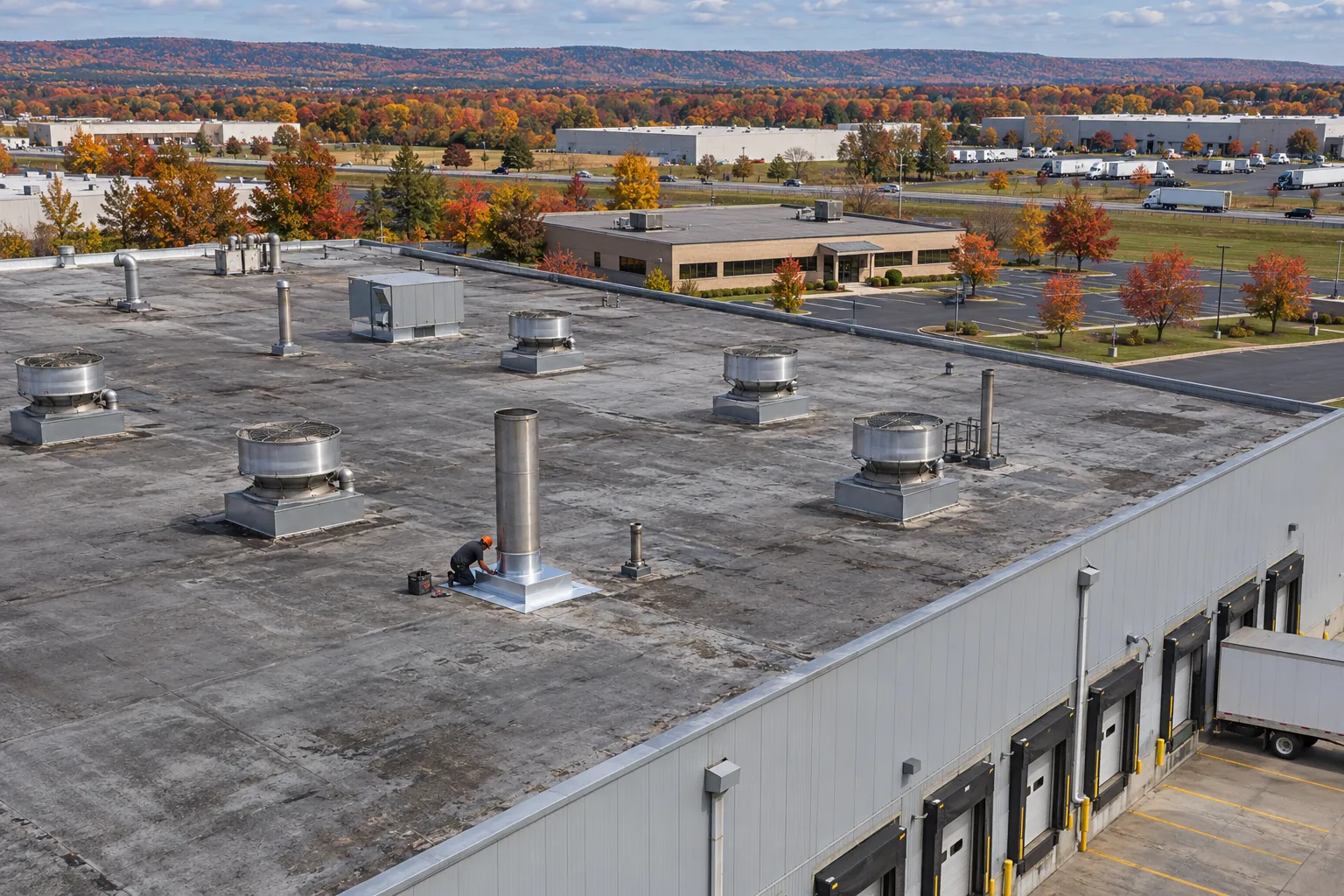
As an Allentown industrial roof repair contractor, we fix stack flashing, fan curbs, seams, and wet insulation on working plant roofs.
Allentown industrial roof repair depends on what runs under the roof. These four situations shape how the work gets scheduled.
The area below is protected and the repair is sequenced around the line schedule.
Heat and residue break down flashing at stacks, which gets rebuilt with suited material.
Traffic to equipment scuffs laps and curb corners that are repaired and protected.
Moisture spread over large plant areas calls for a section replacement plan.
Plant roofs take heat, residue, and service traffic. These five areas need repair most often.
Heat and residue around stacks dry out flashing and membrane. Cracks at the collar let water down the stack into the plant.
Curb corners split where flashing folds, and service crews scuff laps on the way to the equipment.
Repeated foot traffic to equipment wears the membrane thin along the same lines across the roof.
Large roofs collect water in long valleys, where debris from equipment blocks the drains.
Leaks over warm, humid process areas soak insulation quickly and rust the deck below it.
Methods are picked for the roof system and for what happens on the floor below.
Defects are mapped against equipment, drainage, and the production areas below, with safe access routes and repair boundaries marked.
Damaged flashing around stacks is removed and replaced with heat-suited material and a new storm collar.
Curb flashing is stripped and rebuilt with reinforced corners, and walkway pads are added on the path to the unit.
Wet insulation in a bay is replaced in stages that match the plant schedule, with each area dried in before the crew moves on.
Drains are cleared and their bowls checked, and low valleys get repairs that stop water from sitting at seams.
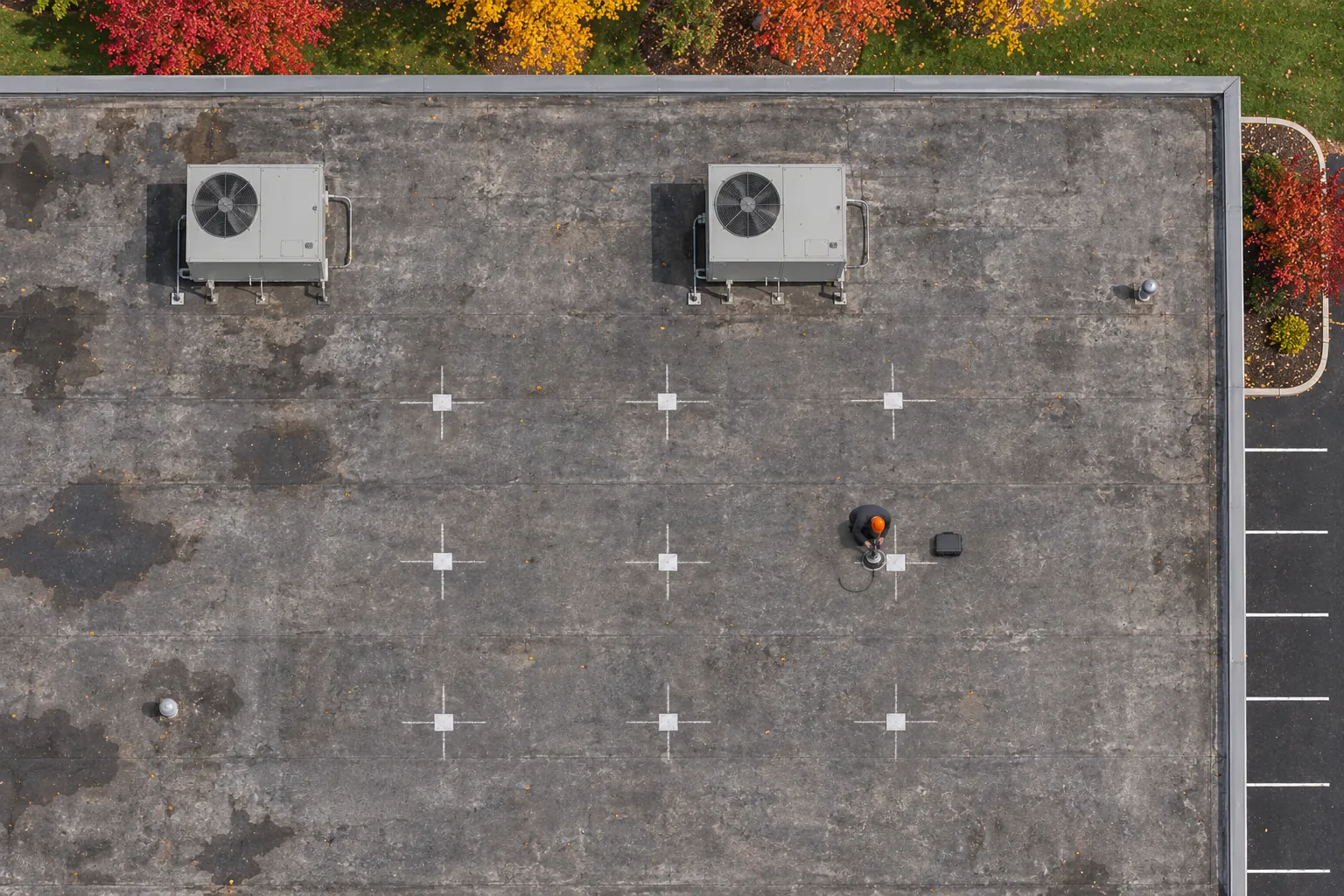
A planned repair keeps water off the production floor without stopping the whole plant.
Most repairs happen while lines run. Shutdowns are limited to the openings that need one. Each shutdown is booked with your production planner.
Covers and catch protection go in below the work area before any roof opening is made. Protection stays until the opening above is sealed again.
Stack repairs use materials chosen for the temperature and residue at that stack. Collars and flashing are sized to the stack diameter.
Each repair is logged with photos and locations for maintenance and safety files. The log follows the plant’s own area names.
Choose the option that fits your facility today.
Call and tell us what sits under the water. The area is made safe with plant staff before roof work begins.
Call UsSend the address and your production schedule. We plan the inspection and repair around it.
Schedule Free InspectionFour stages, each agreed with the plant before the crew moves to the next.
Walk the roof with a plant contact, note stacks, curbs, drains, and walk paths, and match leaks to the equipment and lines below.
Agree on access, protection under the work, and any shutdown windows. Openings over sensitive equipment get their own timing.
Flashing, seams, and wet insulation are fixed one area at a time, and each area is closed before the next one is opened.
You get photos, marked locations, and notes on areas to watch, ready for the facility maintenance file.
Plant campuses usually mix roof types and building uses.
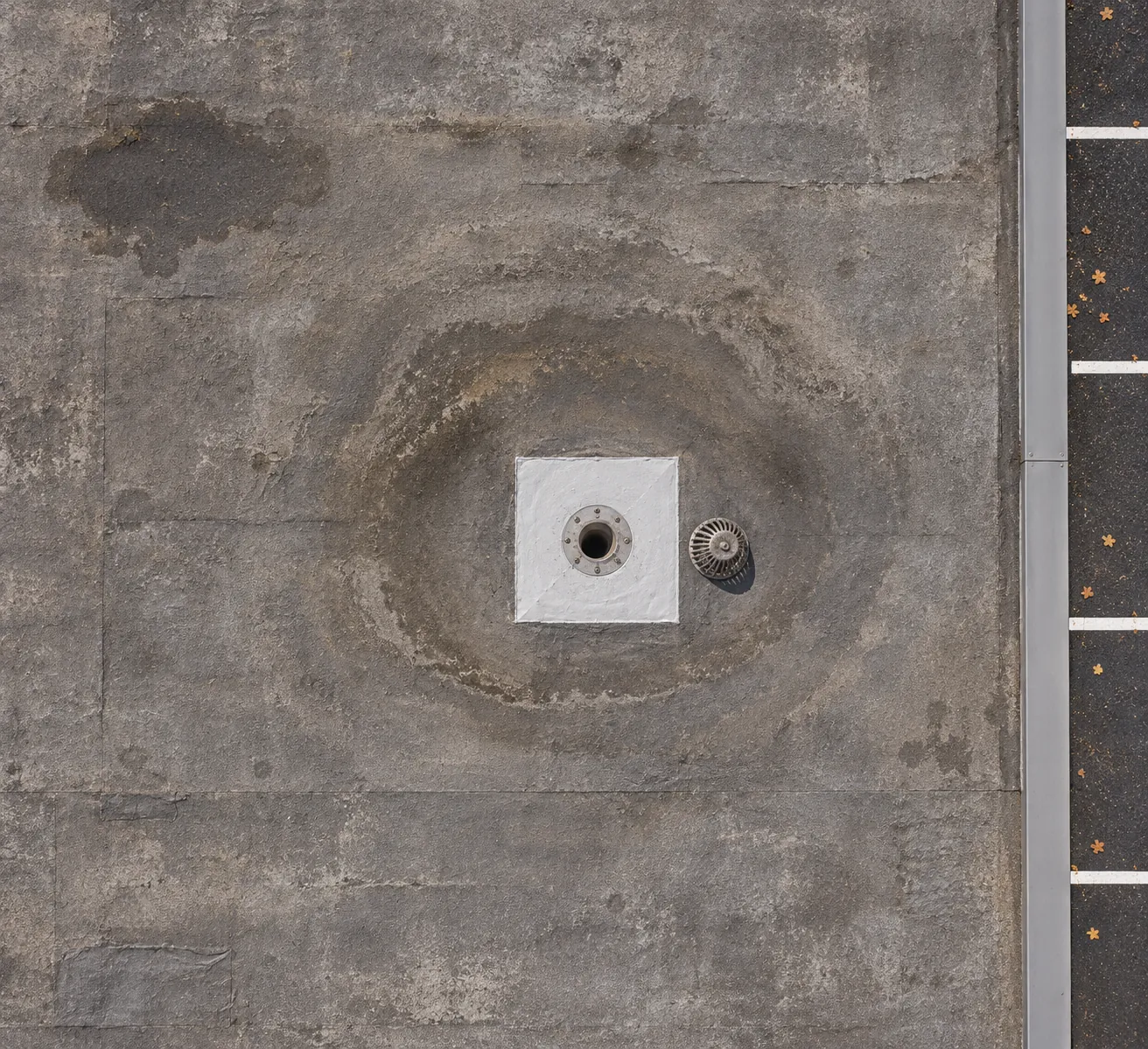
Office and warehouse wings beside the plant need membrane, drain, and blister repairs.
Flat roof repair in Allentown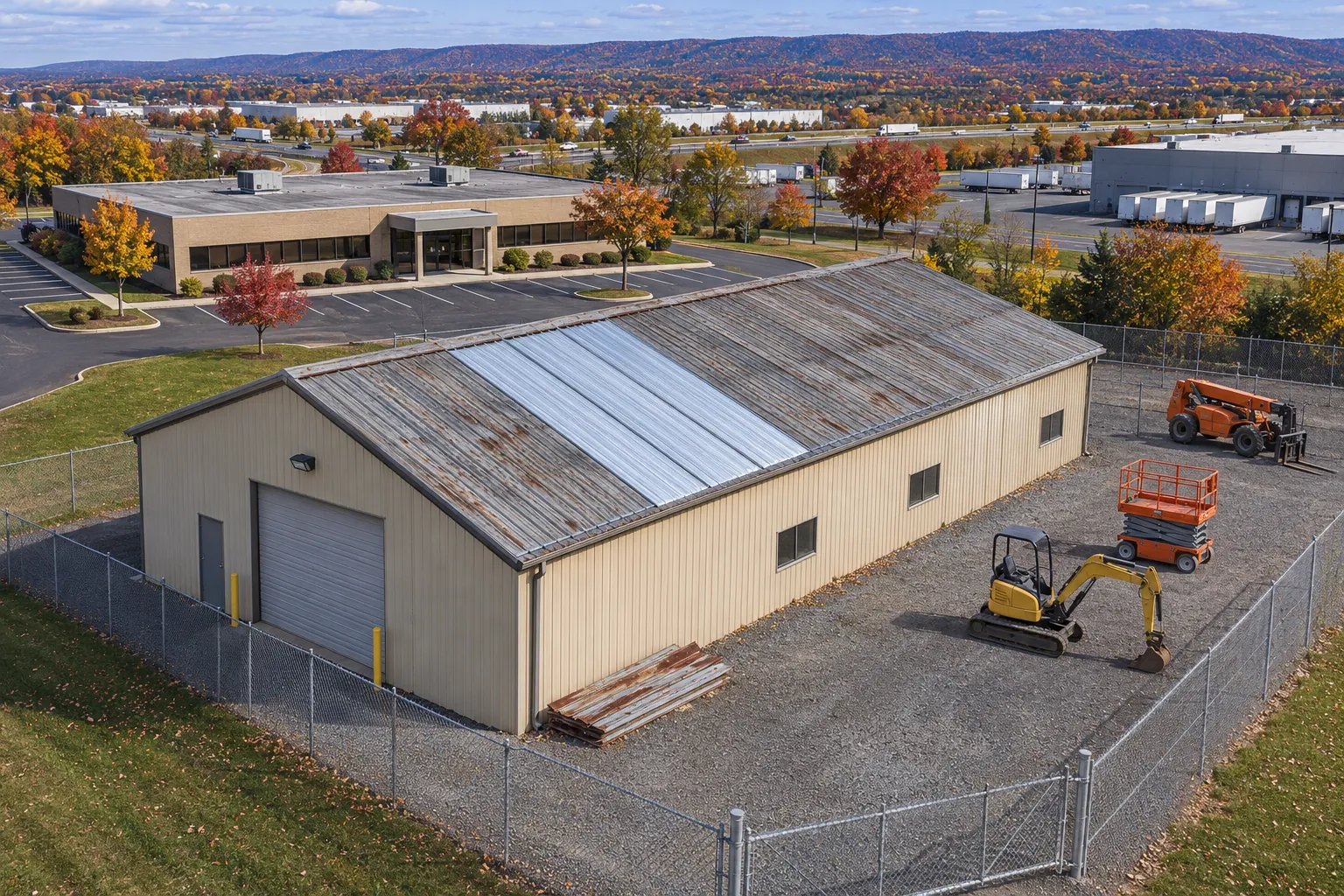
Metal storage buildings on the same lot need screw, lap, and panel repairs.
Metal roof repair in Allentown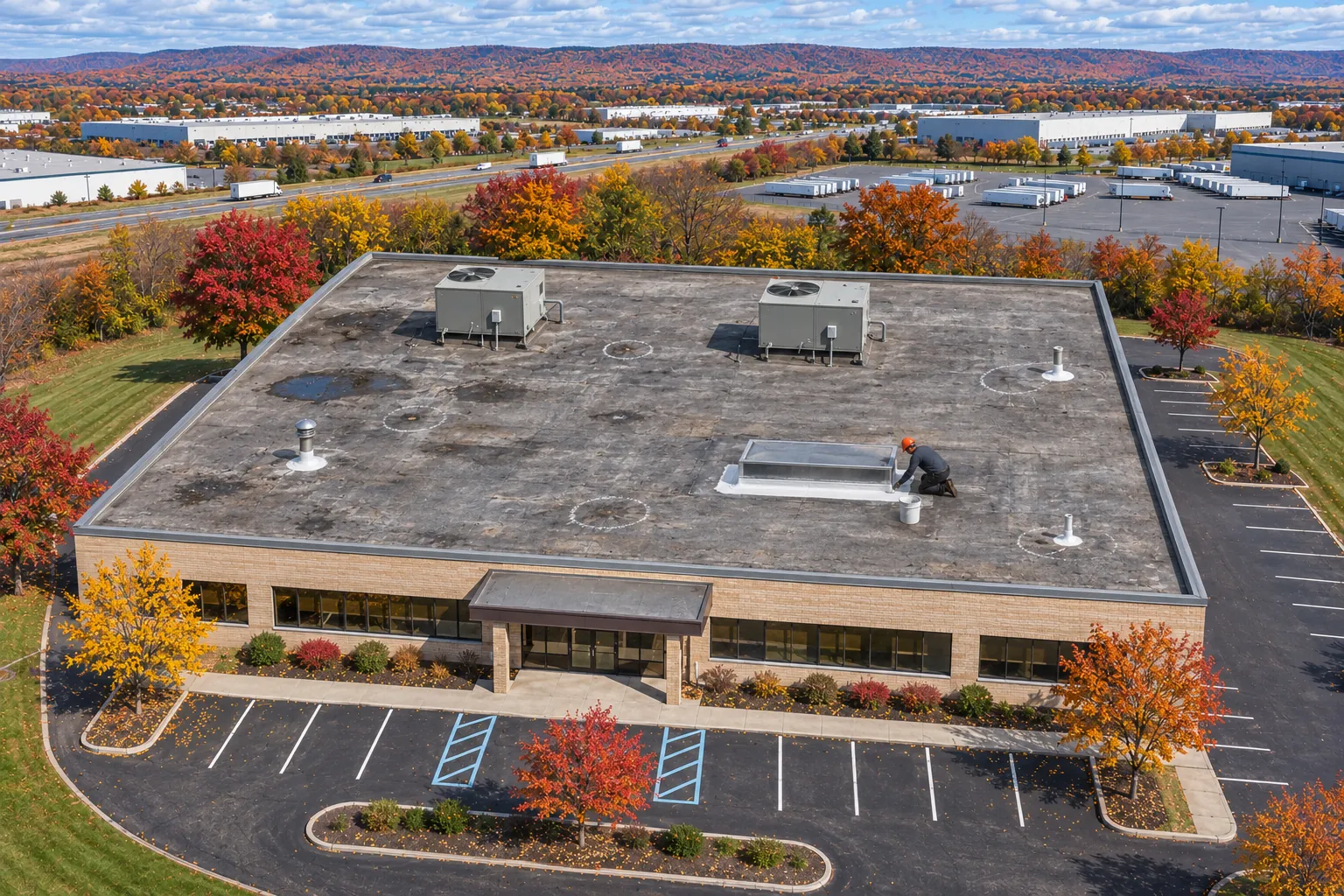
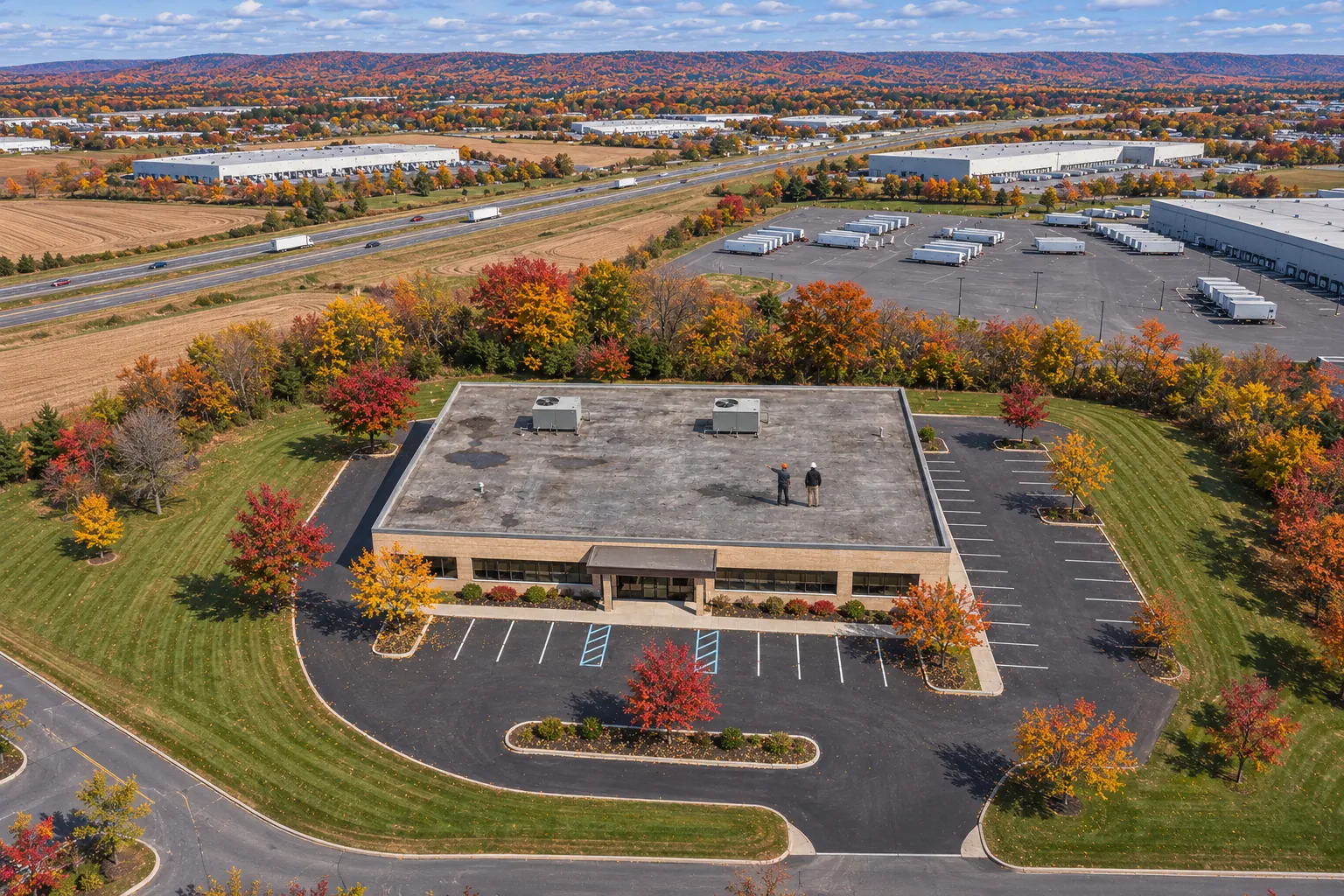
Hard-to-find leaks get traced from the plant floor back to the roof first.
Roof leak repair in AllentownAnswers about inspections, cost, and working over active production.
It should tie each roof defect to the equipment, drainage, and production area under it. We look at service traffic, exhaust exposure, and moisture past the visible damage, then mark safe access and repair boundaries, and list what needs more testing.
The trace, the roof system, how many areas are damaged and their size, wet insulation from core cuts, flashing and drain work, and access. Work order and protection over the line add to it, and section replacement gets compared where the roof calls for it.
Roof material, how it failed, and how far the damage reaches. We also look at the process below, equipment connections, and access limits, so the repair fits the plant instead of starting from a patch product.
Usually, yes. Repairing roofs over production floors works when the area below can be protected and isolation is agreed. Debris, water, and equipment sensitivity set the order, and a few openings need a shutdown window.
From an on-roof inspection, never from square footage alone. The number of defects, wet areas, stack and curb work, protection below, and any shutdown timing are listed by location in the written scope.
Covers, catch tarps, and taped plastic go over equipment under each opening before work starts. Cuts are kept small, debris is bagged on the roof, and plant staff check the protection with us before the crew moves to the next section.
Tell us where the roof leaks and what runs beneath it. We plan the repair with your plant team and fix it section by section.