If Your Roof
Water Pools Near a Drain After Every Rain
Clogged or loose drains on membrane roofs get cleaned, reset, and resealed, and the laps around the outlet are checked for water damage.
Start WithFlat Roof Repair
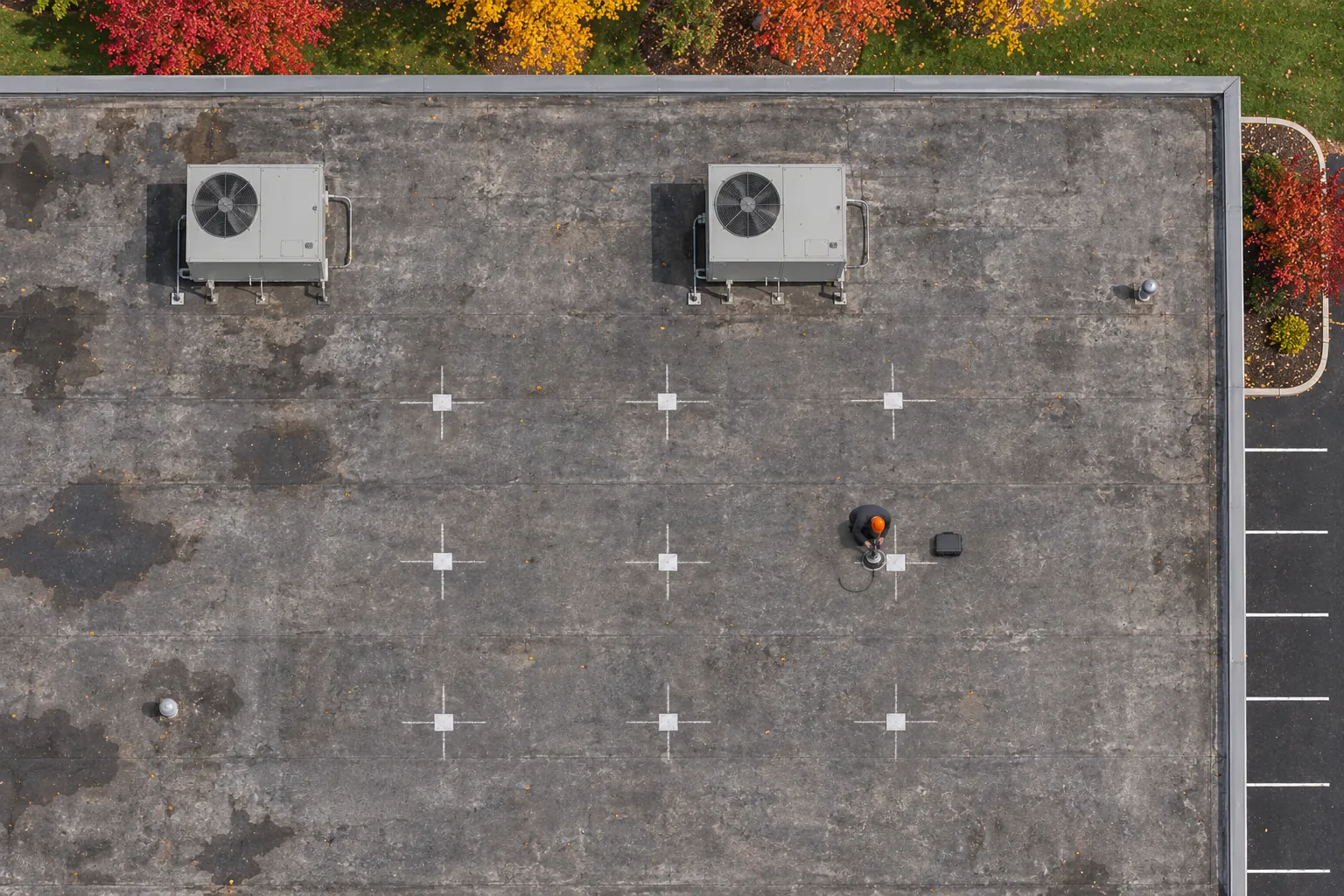
Our commercial roof repair services in Allentown cover flat membranes, metal panels, active leaks, and plant roofs, and each one starts with a roof inspection.
Each of our commercial roof repair services in Allentown fits a different roof system or problem. Step through all four to find the one that matches your building and its roof.
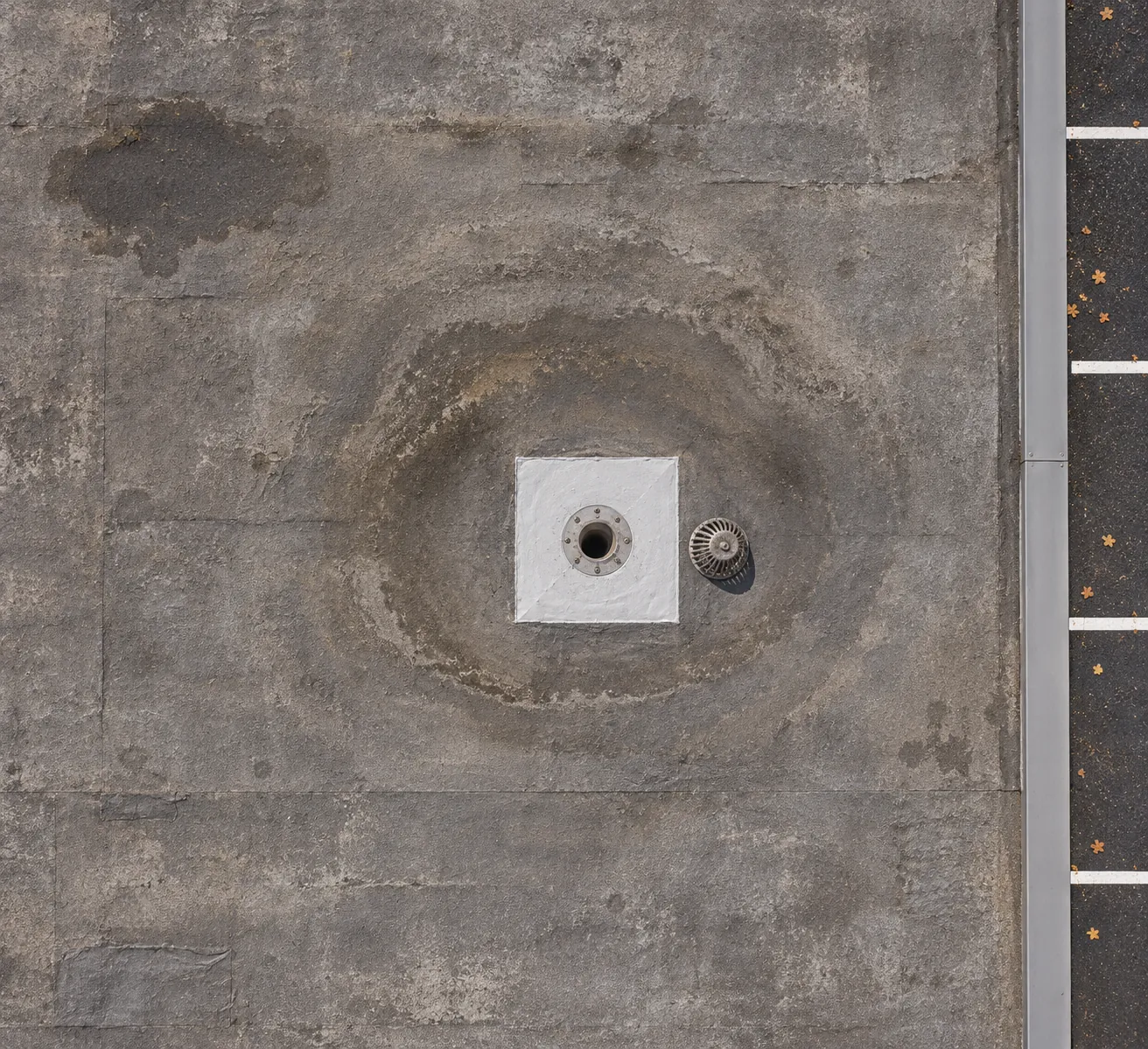
TPO, EPDM, modified bitumen, and built-up roofs on low-slope buildings. Typical work: drain bowls and clamping rings, split laps, blisters, base flashing, and replacing wet insulation found with core cuts. Core cuts decide how far each repair reaches.
Best For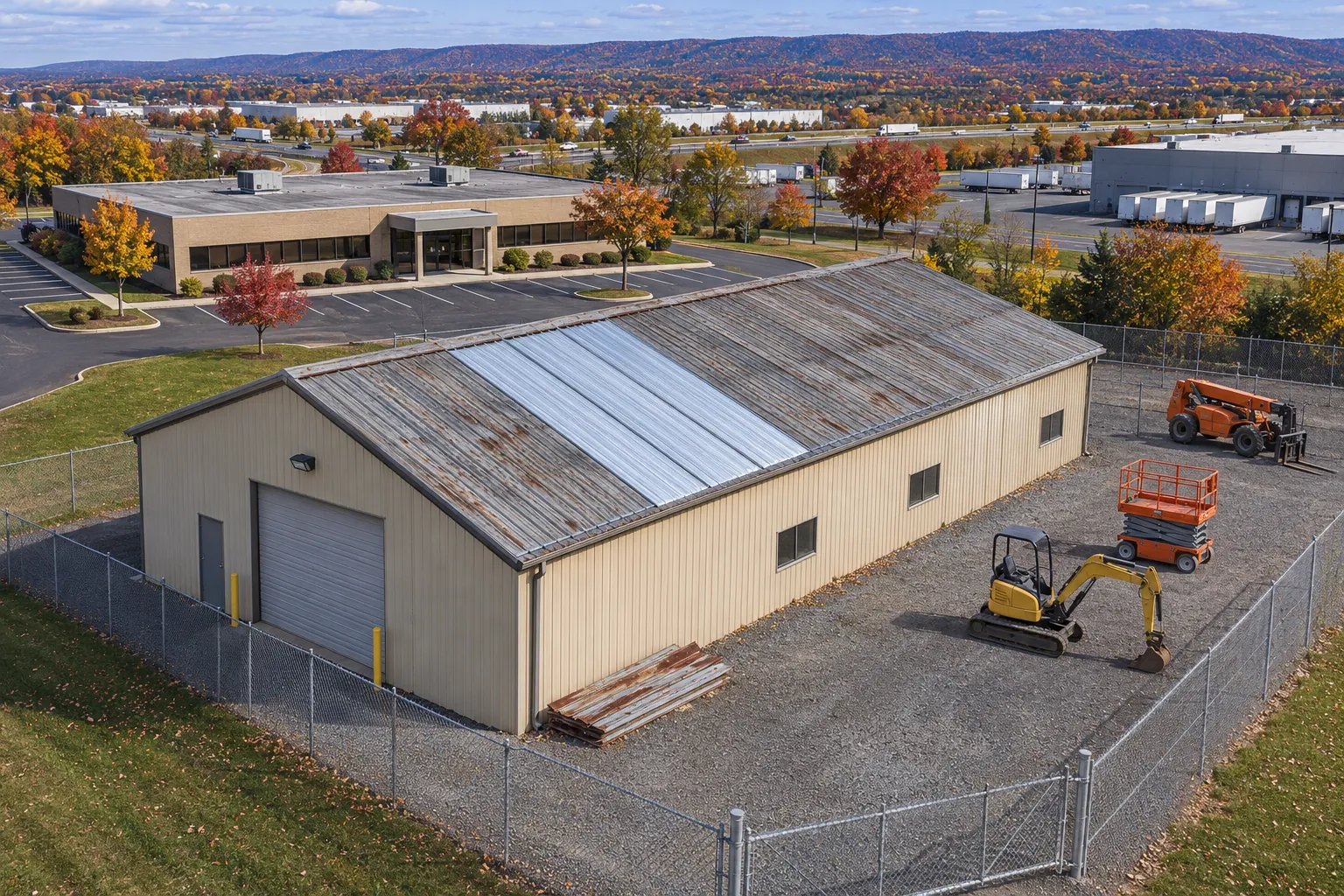
Exposed-fastener and standing-seam roofs. Typical work: resetting or upsizing screws, resealing side and end laps, swapping holed panels, and rebuilding pipe boots and curb flashing. Supports under failed screws are checked before anything is refastened.
Best For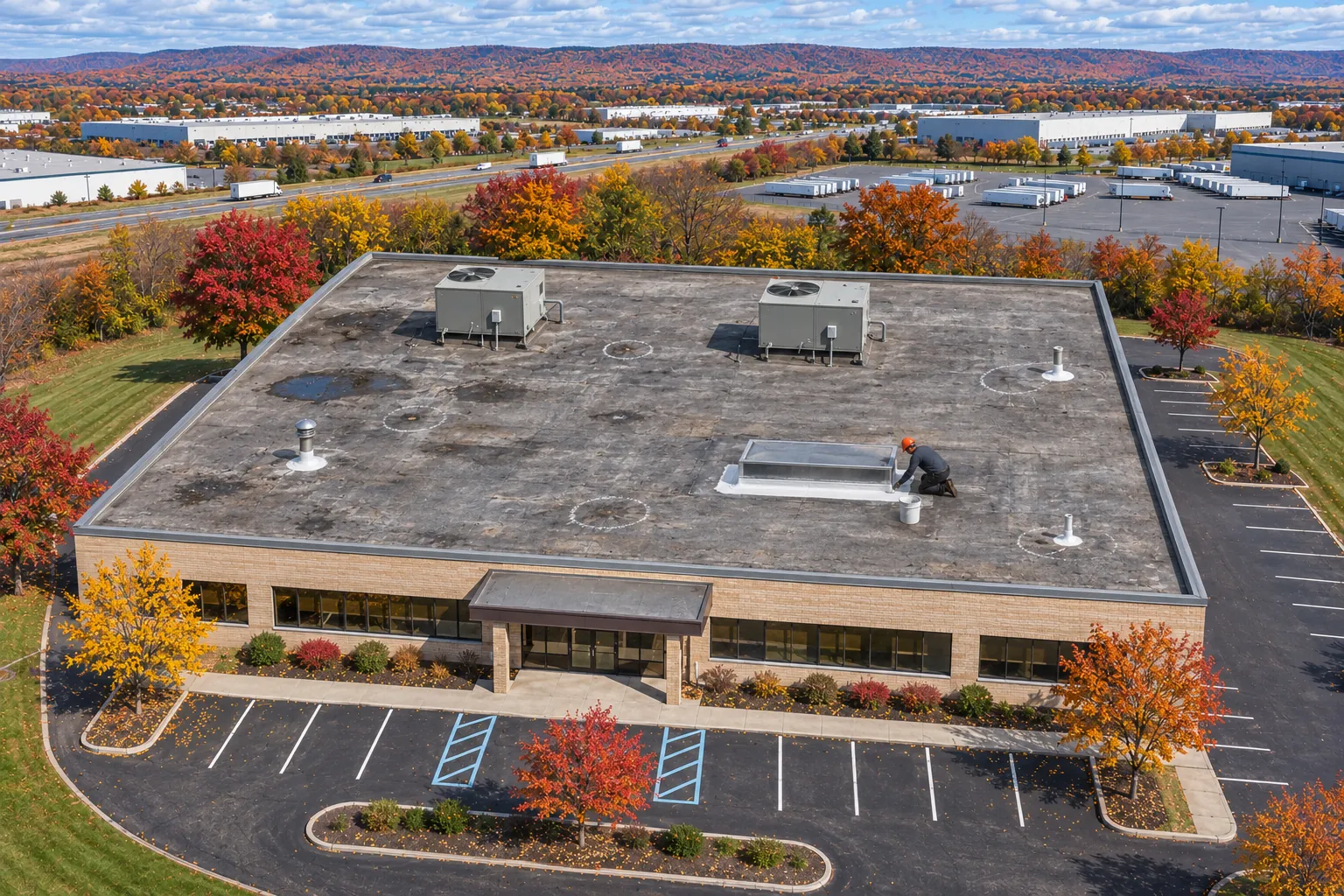
Any roof with water showing up inside. The work starts with tracing from the stain to the entry point, including snowmelt paths, parapet coping, and rooftop units, then repairs the opening. The trace is photographed so owners and tenants see the same evidence.
Best For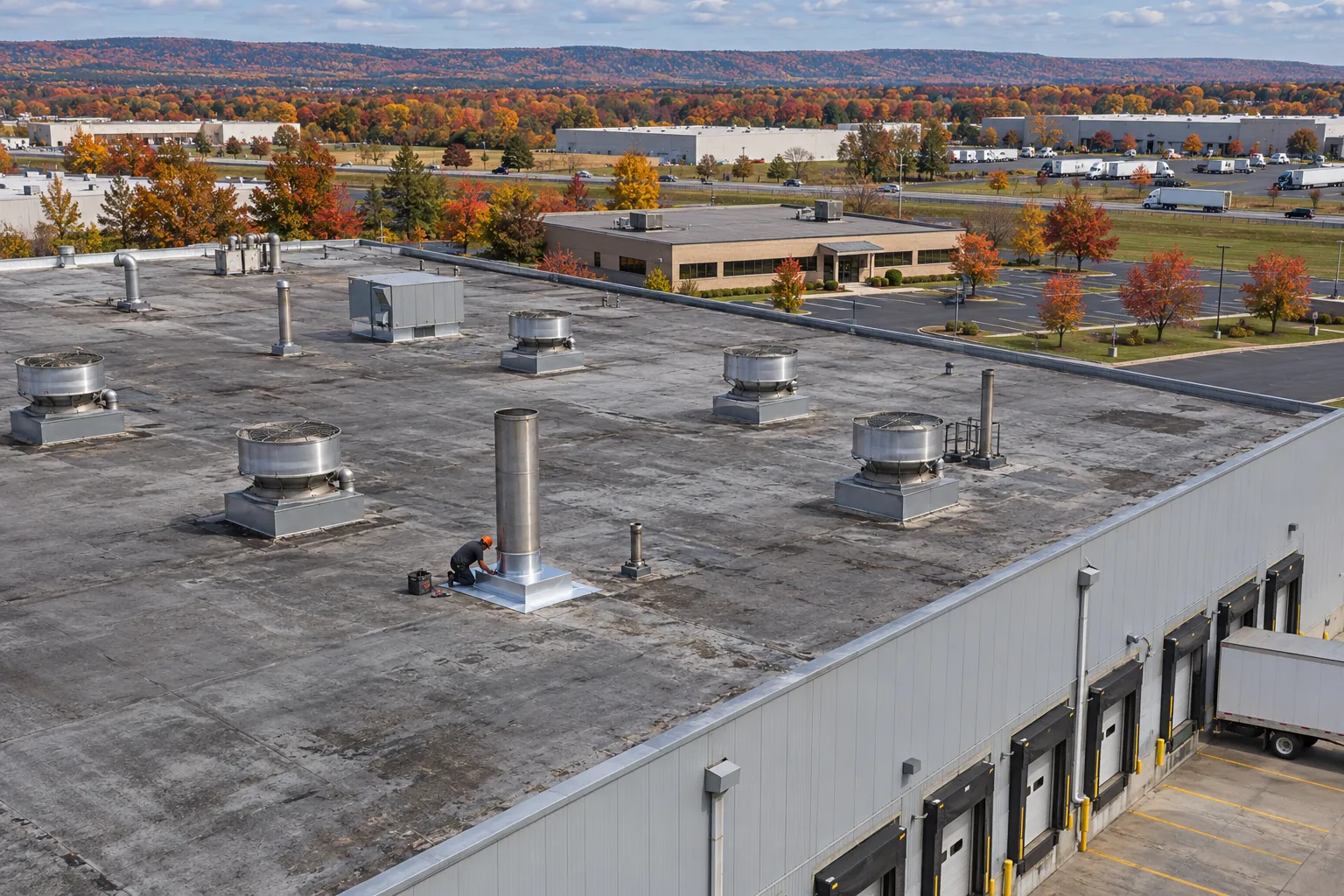
Plant and processing roofs with stacks, fans, and service traffic. Repairs are planned with plant staff around production, protection below, and any needed shutdown windows. Protection over equipment stays in place until each opening is sealed.
Best ForStart with what you see on the roof or the ceiling. Each situation below points to the service that usually handles it first, and the inspection confirms the call.
Clogged or loose drains on membrane roofs get cleaned, reset, and resealed, and the laps around the outlet are checked for water damage.
Loose fasteners and open laps on panel roofs get reset and resealed, with the purlin under each failed screw checked as well.
Tracing from the stain back to the roof finds the true opening first, whether it is a lap, a curb, a wall, or a rooftop unit.
Repairs keep chasing new leaks when wet layers cover most of the roof, so the findings point to replacing those sections.
Start with whichever describes your building today.
Call and describe where the water shows up and what sits under it. We sort out the right repair once we are on the roof.
Call UsSend the address and what you noticed, such as ponding, rust, or lifted seams. We inspect and recommend the right repair service.
Get An EstimateAll four services follow the same four stages.
Walk the roof, match interior marks to roof details above them, and photograph each defect with its location on a sketch. Walls, units, and drains upslope of each stain are checked too.
Findings decide the service and the method: membrane, metal, leak tracing, or a staged plant repair. Section replacement is flagged wherever core cuts show wide wet areas.
Work happens in sections with the area below protected, using material that matches the existing roof. Each section is closed before the next one is opened.
Photos of every repaired seam, drain, or flashing, the marked sketch, and notes on roof areas to watch go to the owner or manager, ready to share with tenants or insurers.
Answers about choosing the right repair service, condensation, leaks near electrical areas, and keeping roof repairs working.
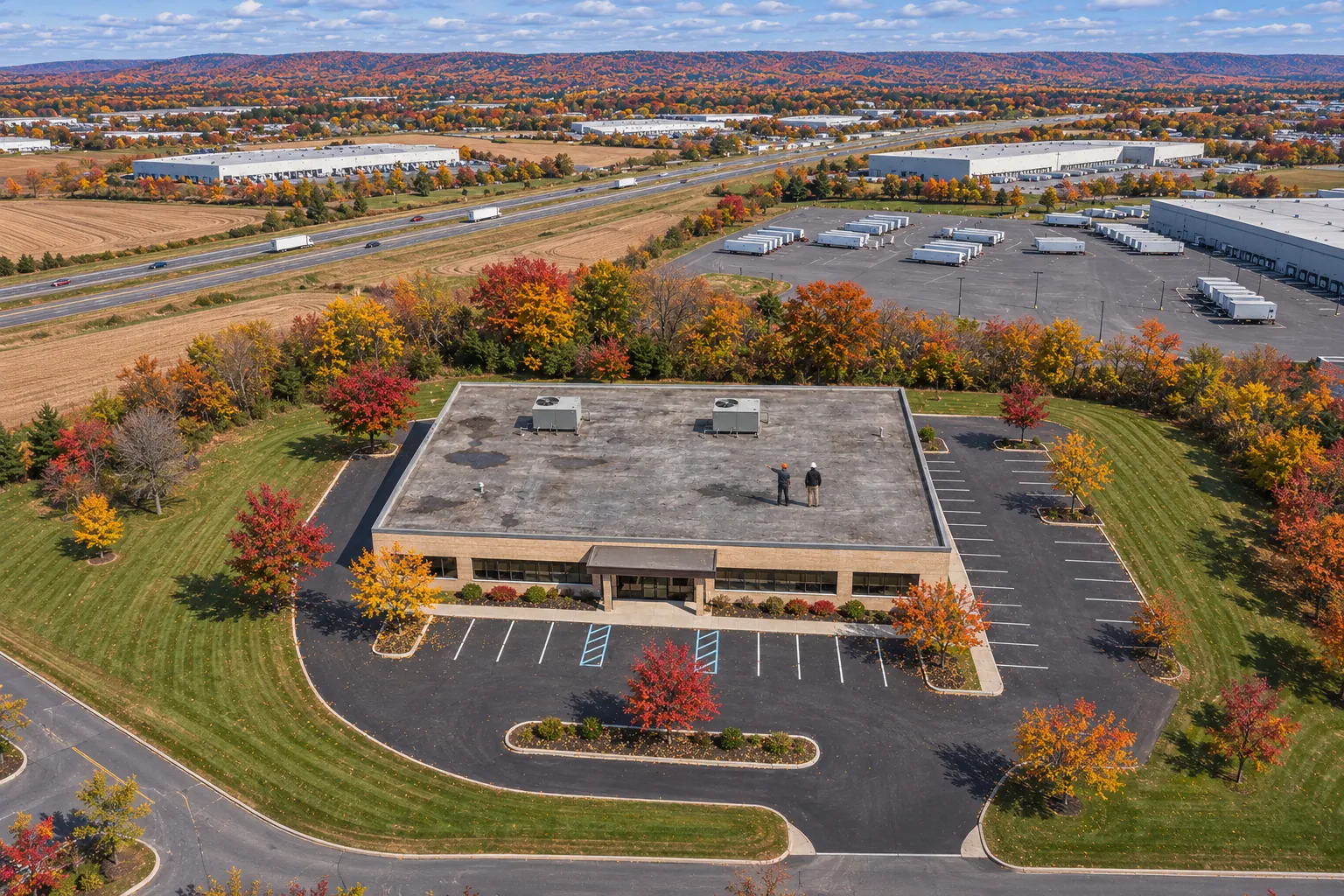
It follows the roof system and the problem. Membrane roofs go to flat roof repair, panel roofs to metal roof repair, unexplained stains to leak repair, and plant roofs over production to industrial repair. The inspection confirms it.
Often. In older brick buildings, warm humid air meets cold roof parts and drips like a leak. We compare when the water appears with rain and building use, and check walls and flashing too, so no patch goes on for water that came from inside.
Yes. The area is controlled first and facility staff are brought in before roof work is planned. We arrange interior protection and safe access with the operator, and still trace the source once conditions allow it.
Clear drains and a quick check after equipment service visits. We look at patch edges, flashing, and the material around each repair, never the patch alone. Logging changes after summer storms and service traffic catches new defects before they reach the ceiling.
Frequently. A plant can have a flat office wing, a metal storage shed, and a leak nobody has traced. One inspection covers all of it, the scope separates each repair, and the work can be scheduled together or one roof at a time to suit your budget and operations.
Soon, because water spreads through insulation and deck while it waits. Move stock and equipment from under the drip, catch what you can, and call with the address. We plan safe access and protection first, then trace the source.
Tell us about the roof and the leak. We match the right repair service to your building, explain why, and get the work scheduled.