If Your Roof
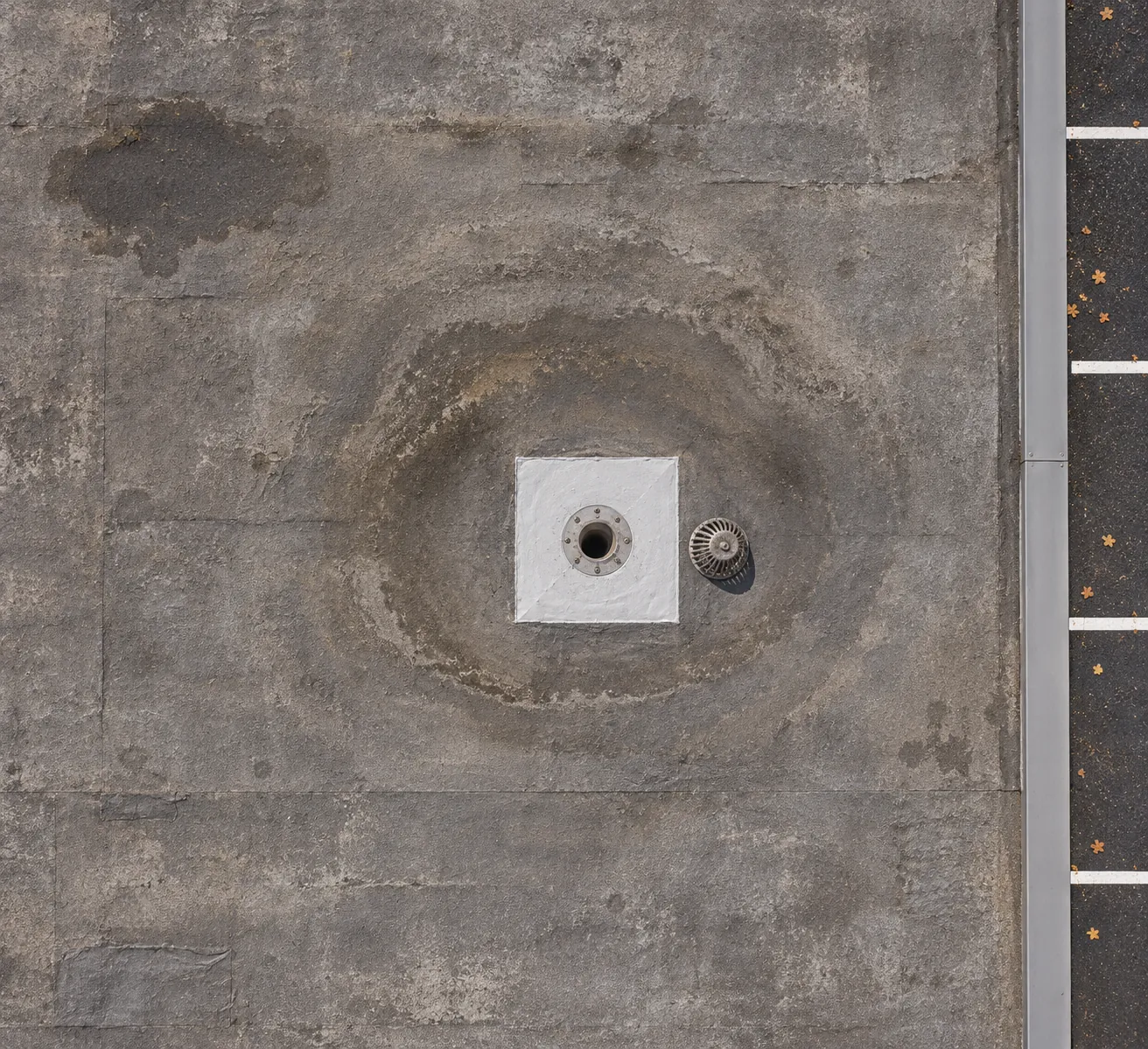
Water Rings Sit Around One Drain
Ponding at a single outlet usually means a clogged strainer, a loose clamping ring, or a low bowl.
Start WithDrain Repair
As an Allentown flat roof repair contractor, we fix drains, split seams, blisters, and soaked insulation on low-slope commercial roofs.
Allentown flat roof repair works best when the damage sits in known spots. Match your roof to one of these four situations before booking the visit.
Ponding at a single outlet usually means a clogged strainer, a loose clamping ring, or a low bowl.
Blisters get probed for splits and moisture first, then opened and patched only with a plan.
Foot traffic to rooftop units wears laps open in a line we can follow and reseal.
Wide wet insulation under most of the field turns repair into a section replacement talk.
Low-slope warehouse and office roofs around Allentown show the same five trouble spots again and again.
Clamping rings loosen, strainers clog with leaves, and bowls settle below the deck line. Water then sits in a ring and finds the weakest lap nearby.
Adhesive and taped laps let go with age, and heat-welded seams crack where the roof flexes. Probing each lap shows which runs have opened.
Trapped air or vapor lifts the membrane off the board. Splits on a blister top let rain straight into the insulation below.
Membrane turned up a parapet or curb pulls loose and opens at its top edge. Freeze-thaw cycles widen those gaps through the winter.
Soaked boards stop holding the membrane flat and spread water across the deck. Core cuts tell wet boards from dry ones.
The method follows the membrane we find. TPO, EPDM, modified bitumen, and built-up roofs each take their own detail.
Clamping rings get reset or replaced, the bowl is cleaned and sealed to new membrane, and the pipe below is checked for cracks before the strainer goes back.
Intact blisters are left alone and watched. Split ones are cut, dried, and covered with a patch of the same membrane that laps onto firm material.
Thermoplastic seams are cleaned and rewelded with hot air. EPDM laps get primer and new seam tape with a cover strip.
Soaked insulation is cut out to dry edges, new boards are fastened, and fresh membrane is tied into the surrounding roof.
Loose base flashing is stripped back, reattached, and capped with termination bar and counterflashing where the wall allows.
A flat roof repair aimed at the failed detail keeps the dry parts of the roof in service.
Clear, sealed drains move rain and snowmelt off the membrane instead of letting it soak the laps around the outlet.
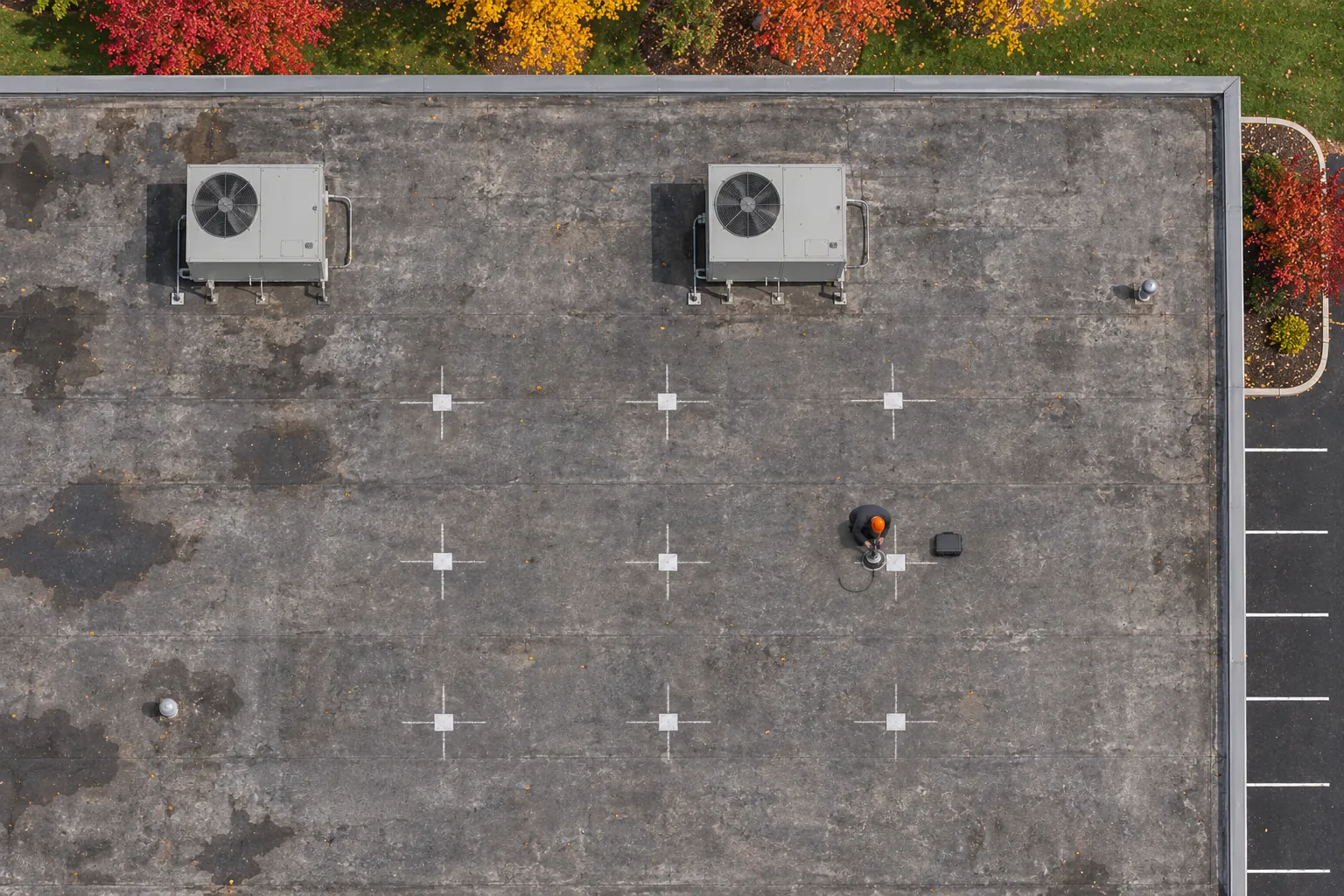
Core results limit tear-out to the wet area, so sound insulation is kept and the patch stays the right size.
Work stays in the bays around the repair. Loading docks and offices under the rest of the roof stay open.
Photos and a marked sketch show where the roof was repaired and which areas to watch next.
Choose the path that fits your roof today.
Call and tell us which drain or wall the water shows up near, and whether anything sits under it.
Call UsSend the address and where you saw the water or bubbles. We inspect and write up the repair.
Schedule Your Free InspectionFour stages, each finished before the next starts.
Walk the membrane, drains, and flashing, and match each interior stain to the roof area above it. Ponding rings and debris lines get photographed and measured.
Small core cuts show the layers and whether insulation is wet. Readings are marked on a sketch so the repair edges follow the moisture, never a guess.
Drains are reset, seams rewelded or retaped, blisters opened and patched, and wet boards replaced. New membrane laps onto clean, firm roof.
Seams are probed, drains are flow-checked with water, and every repair is photographed. You get the marked sketch with the findings.
Many flat roofs also carry metal sections, equipment curbs, or leaks that start somewhere else.
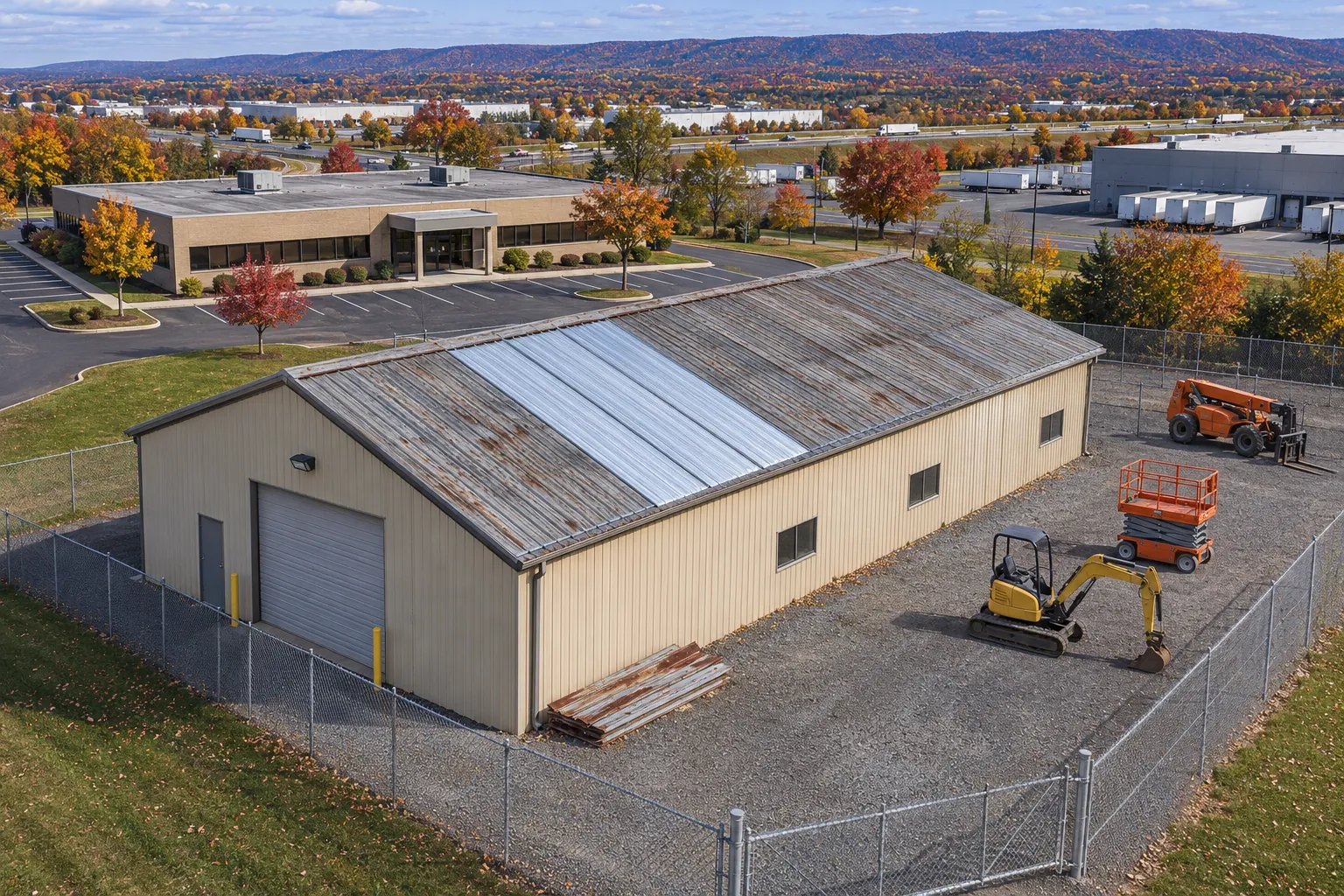
Metal canopies and shop additions beside a flat roof need their own fastener and lap repairs.
Metal roof repair in Allentown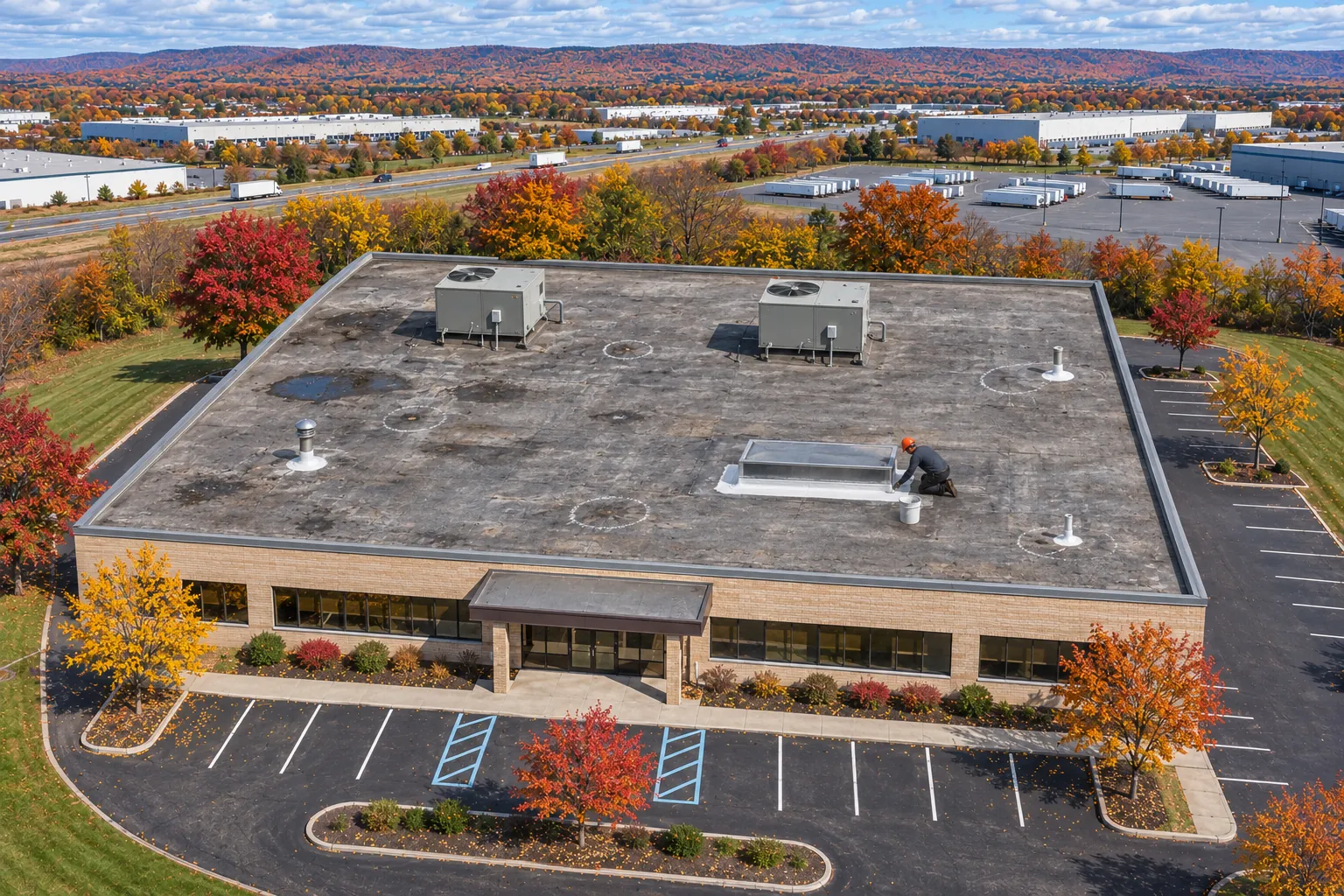
Leaks that show up far from any drain or seam get traced from the stain back to the entry point.
Roof leak repair in Allentown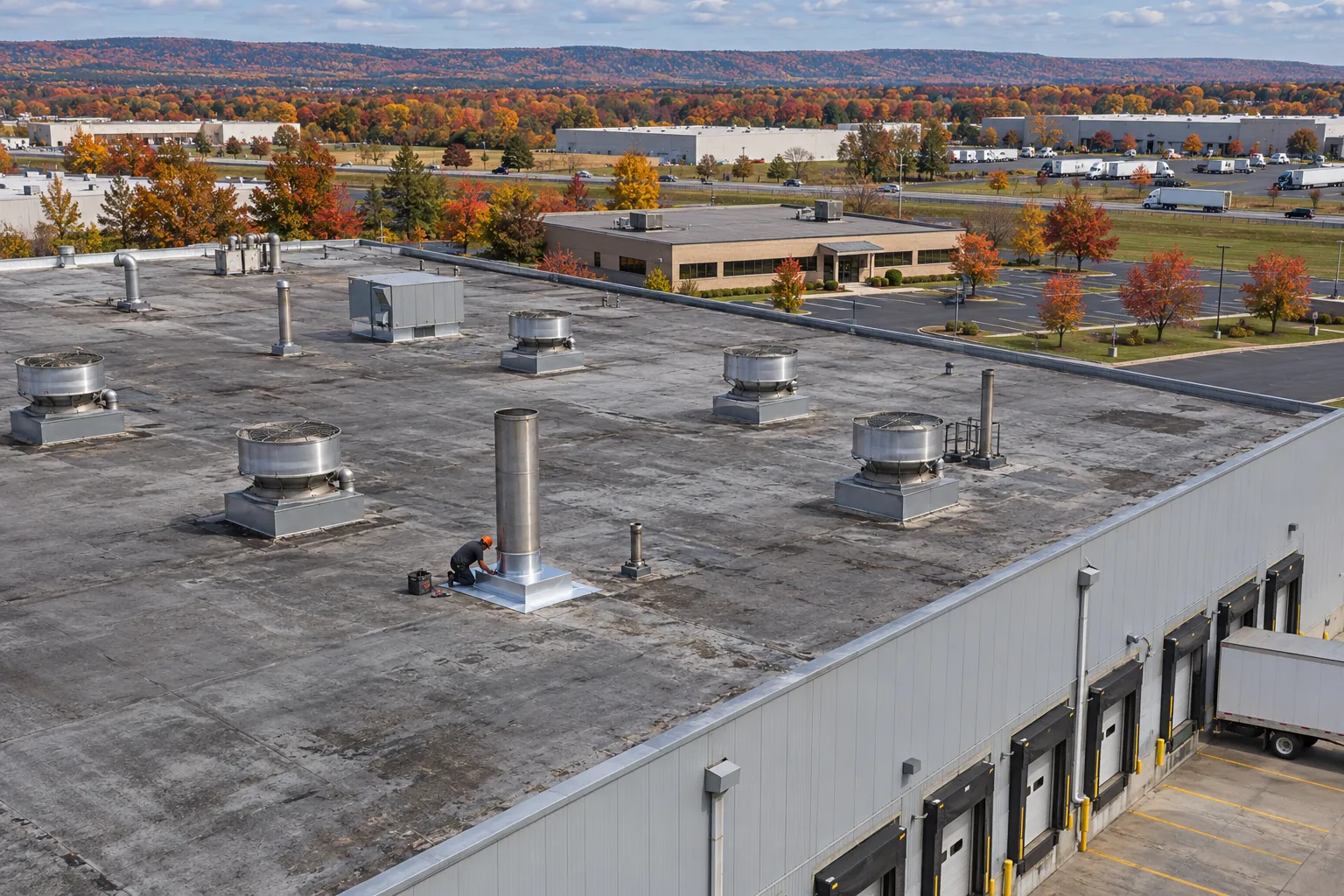
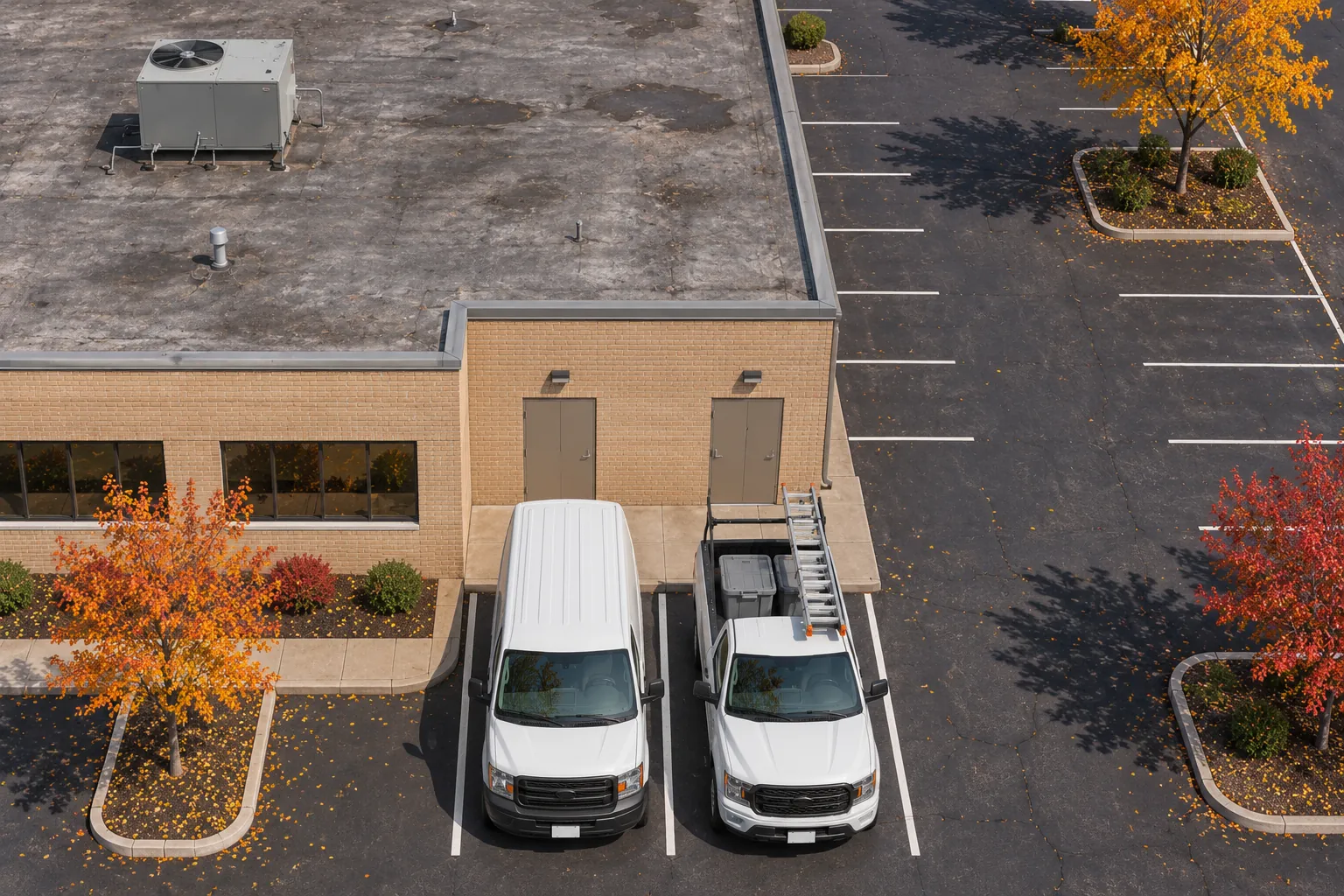
Plant roofs with fans and stacks need repairs staged around the floor and equipment below.
Industrial roof repair in AllentownAnswers about drains, patches, blisters, and price on low-slope commercial roofs.
Because the leak often sits in the drain itself. A cracked bowl, a loose clamping ring, or a split pipe below the deck keeps letting water in under a fresh patch. We open the whole outlet, check the pipe, and bring in a plumber when the fault is below the roof.
Price comes from what the roof visit finds: how the leak was traced, the membrane type, how many damaged areas there are and their size, wet insulation from core cuts, flashing and drain work, and access. The scope also says whether a local repair or a section replacement makes more sense.
No. TPO, EPDM, modified bitumen, and built-up roofs each bond to different materials, and old repair layers change that again. We identify the membrane and earlier patches first, then pick a method that bonds and laps onto firm, dry material.
Only with a repair plan. Intact blisters are often left and watched, since cutting one opens a new path for water. Split, scuffed, or wet blisters get opened, dried, and covered with matching membrane.
Map them together before fixing any. Core cuts and a walk of every drain and seam show whether the leaks share one wet area or come from separate details, which sets whether you need spot repairs or a section replacement.
Twice a year, in spring and fall, plus after any heavy storm. Look at drains, the edges of each patch, and seams along paths to rooftop units. A short check after snowmelt also catches clogged outlets before standing water reaches the laps.
Tell us where water sits or drips on your flat roof. We find the cause, repair it, and send you photos of the work.