If Your Roof
Drips Only During Heavy Rain
Water that appears with downpours points to drains, laps, or flashing that flood in volume.
Start WithLeak Trace

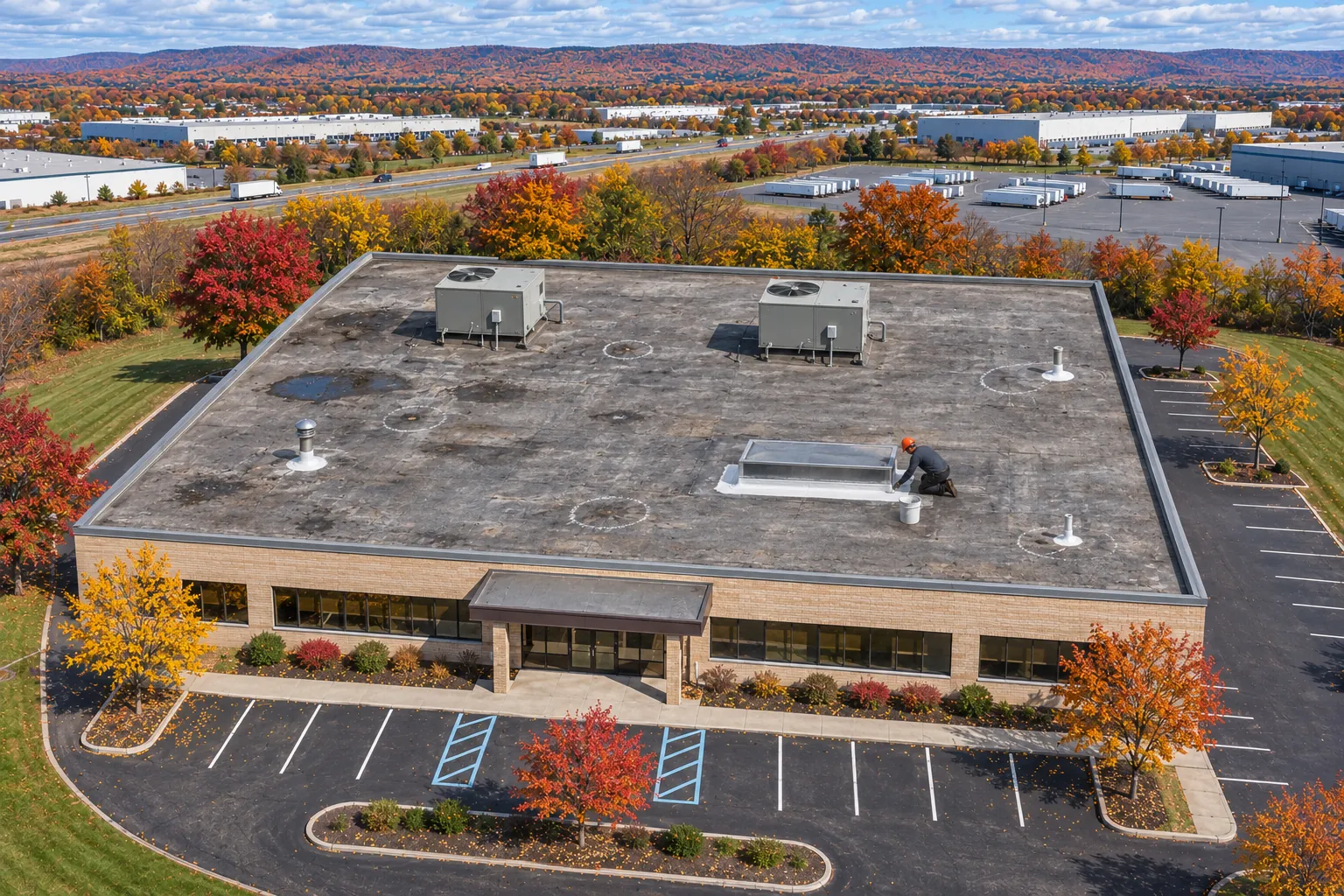
As an Allentown commercial roof leak repair contractor, we trace water from the stain inside to the opening on the roof and seal it.
Allentown commercial roof leak repair starts with where the water shows up. These four patterns point to different fixes.
Water that appears with downpours points to drains, laps, or flashing that flood in volume.
Frozen outlets back meltwater up into details that rain never reaches.
Coping joints and wall cracks above the roof line feed stains near the perimeter.
Fresh leaks across many areas after past repairs signal wider wear on the roof.
The drip you see inside often starts somewhere else. These five sources cover most leaks we trace.
Open cap joints and cracked wall masonry let water in above the base flashing. It then runs down behind the membrane.
Ice at drains, scuppers, and gutters holds meltwater on the roof, where it backs into laps and flashing edges.
Rooftop unit curbs leak at flashing corners, and the units themselves can drip from condensate lines or cabinet seams.
Split seams across the field leak during long rains, and the water can travel several feet before it drips.
Frames, curb flashing, and cracked domes on skylights and roof hatches leak straight into the space below.
Tracing comes before any sealing. The method depends on where the water actually enters.
Interior stain locations are measured from walls and columns, then matched to the roof features directly above and upslope.
Drains, gutters, and scuppers are cleared and checked for ice damage, and the meltwater path is followed to the laps and edges it reached.
Coping joints are resealed or the cap is reset, wall cracks are noted for masonry repair, and base flashing terminations are rebuilt.
Core cuts find soaked insulation around the entry point, which is replaced so the repaired area dries out.
Condensate lines and unit cabinets are checked with the mechanical contractor so roofing work goes only where the roof leaks.
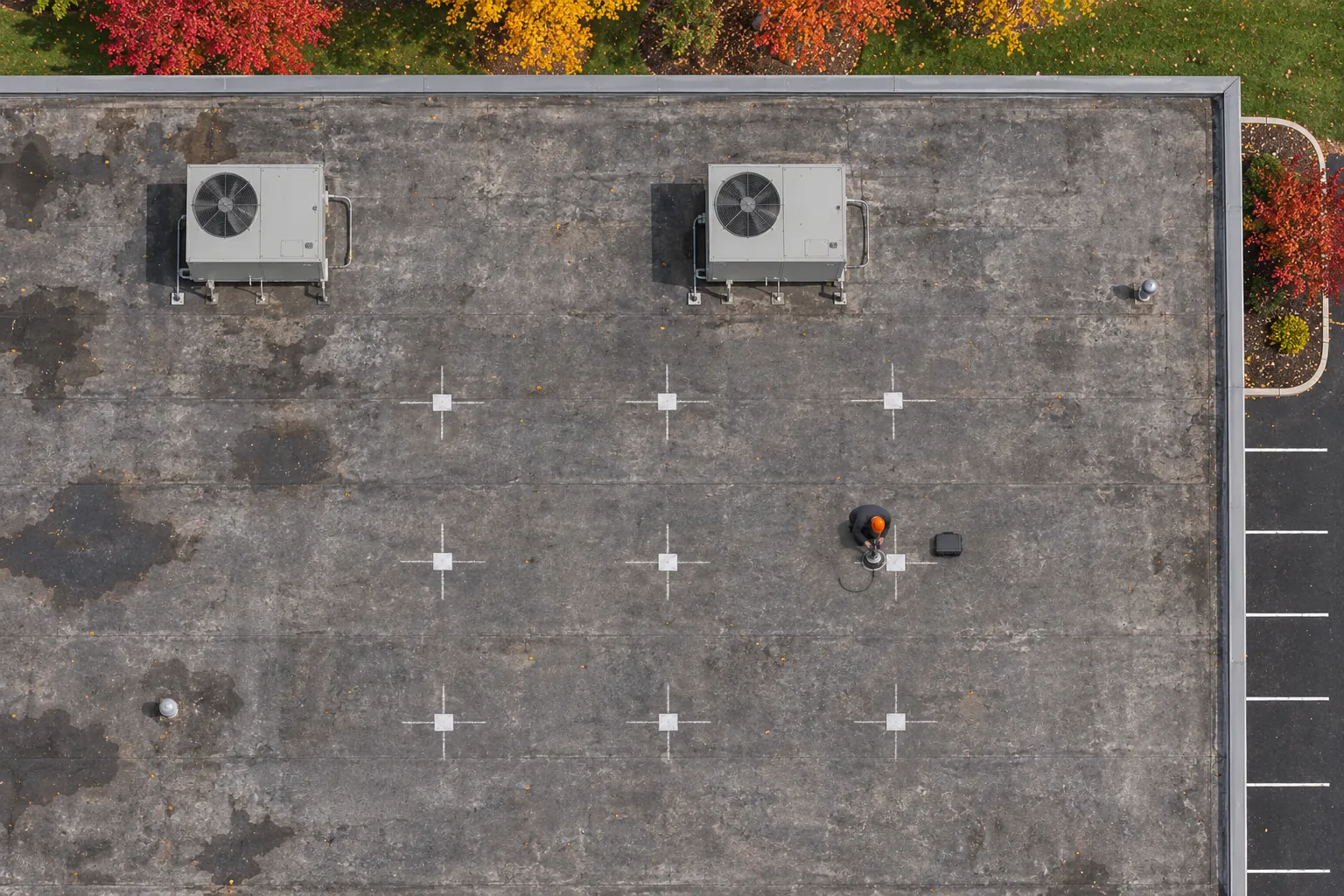
Fixing the actual opening ends the cycle of patches that miss the source.
The repair closes the entry point found on the roof, instead of the spot above the drip.
Soaked insulation around the opening is replaced so trapped water stops feeding new stains.
Findings with photos give owners and tenants the same facts about where the leak started.
A traced repair cuts down the return visits that come from sealing the wrong detail.
Choose what matches your building right now.
Call and tell us where the water lands and what is under it. We set up protection and safe access first.
Call UsSend the address and when the stain appears. We plan the trace around the weather that brings it out.
Get Free EstimateFour stages that start inside the building and end on the roof.
Record the stain locations inside, then walk the roof above them, including walls, units, drains, and skylights upslope from each stain.
Weather timing, core cuts, and the water path along the deck narrow the source to one detail, or show that more than one is leaking.
The opening is repaired with matching material, wet insulation is replaced, and flashing or coping is rebuilt where it let water in.
Repairs are photographed and checked. Your report ties each interior stain to the roof detail that caused it.
Once the source is found, the fix usually falls under one of these services.
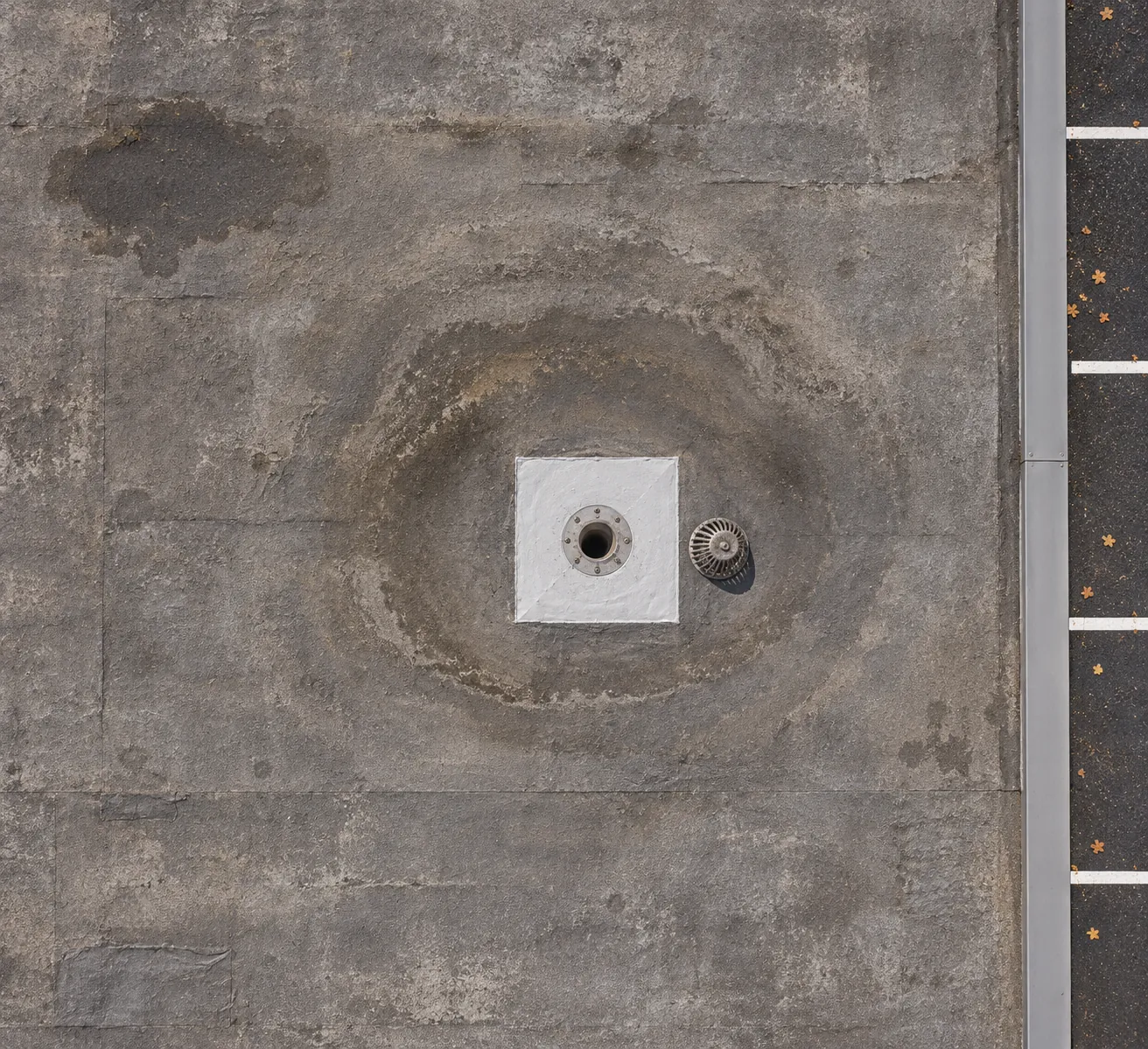
A trace that ends at a drain, lap, or blister becomes a membrane repair with matching material.
Flat roof repair in Allentown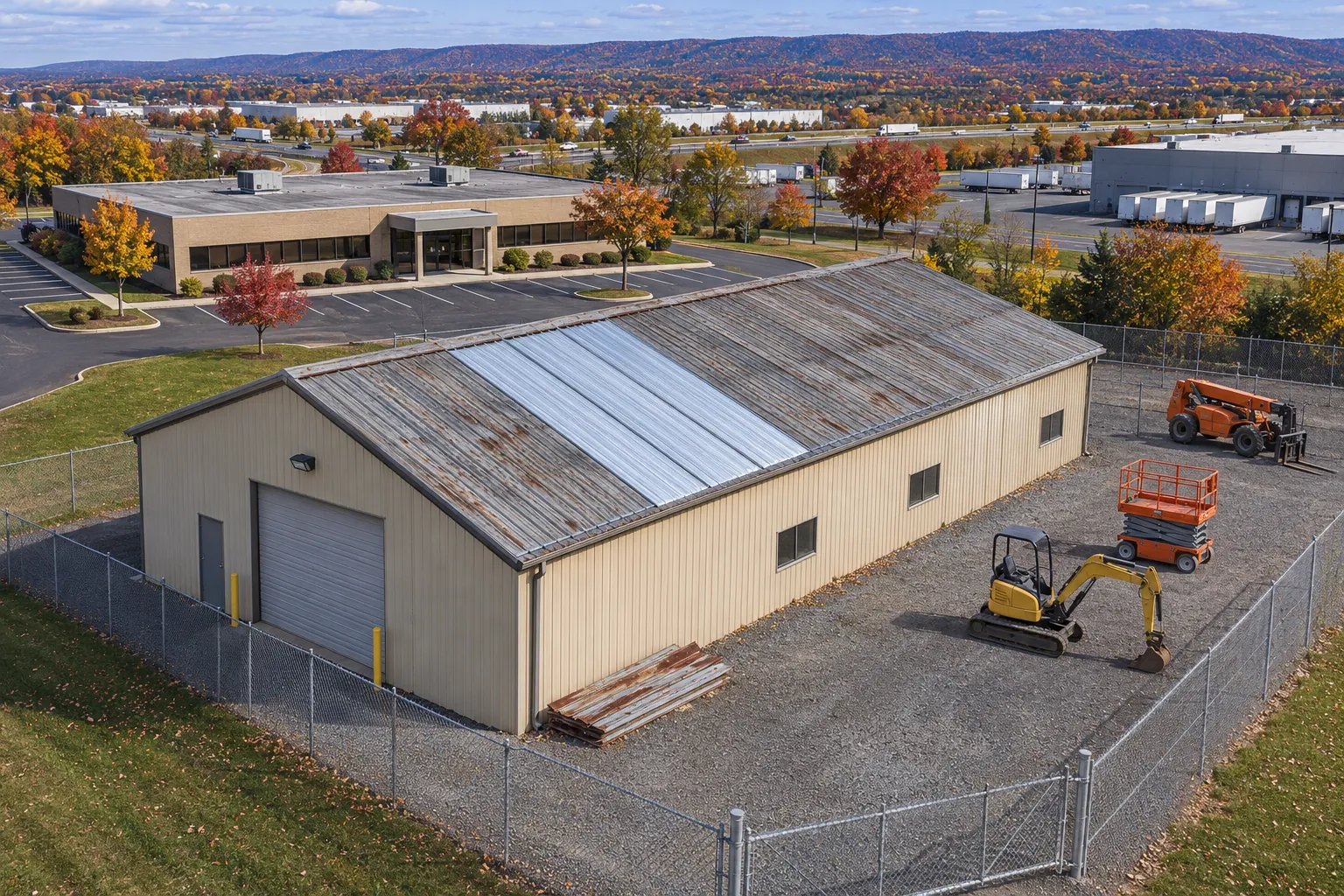
Leaks traced to screw rows or panel laps get fastener and seam repairs on the metal.
Metal roof repair in Allentown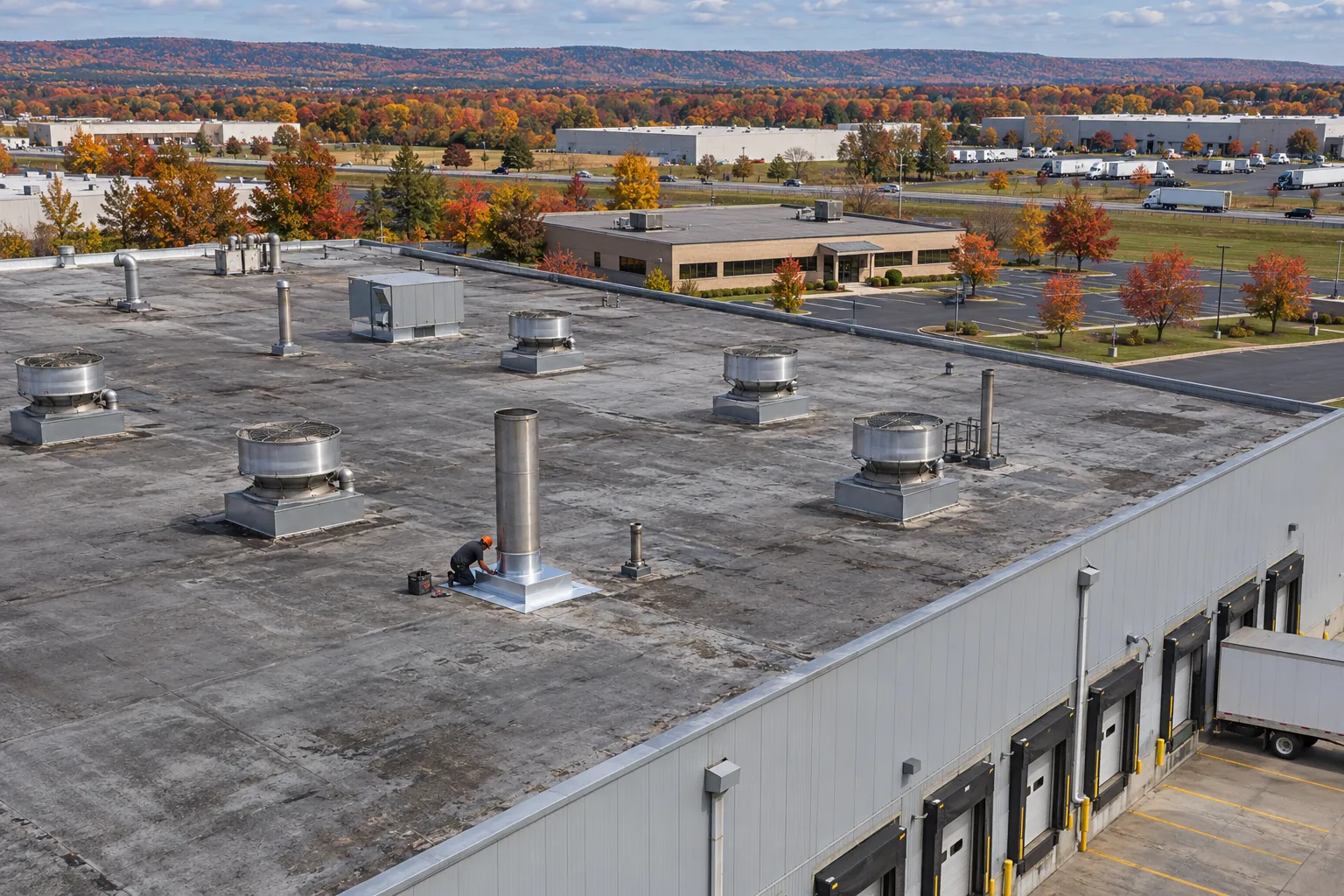
Water dripping over production lines gets repairs scheduled with plant staff and equipment shutdowns.
Industrial roof repair in AllentownAnswers about price, leases, snowmelt, and parapet walls.
Hidden wet insulation or rusted deck can make the repair larger than the opening you see. The price comes from the roof visit: the trace, roof type, damaged areas and their size, core cut results, flashing, drains, and access. Those findings decide repair or section replacement.
Your lease answers that, through its maintenance, repair, and notice terms. Landlord responsibility for roof leaks varies from lease to lease. We describe the damage and the work so owner and tenant can check the terms before anyone pays.
Ice at drains and gutters holds meltwater on the roof, where it backs into laps and flashing that rain runs past. We follow the meltwater path and repair the opening and the wet layers under it.
Yes. Water entering through coping joints or wall cracks runs down behind the base flashing and stains the ceiling near the wall. We check the coping, wall, and flashing top edge together before touching the roof field.
Tracing time, the number and size of entry points, wet insulation found, flashing or coping work, and roof access all set the price. We quote after the roof visit, with each item tied to a photographed location.
Wind pushes water sideways and uphill into laps, coping joints, and flashing tops that shed straight-down rain without trouble. We note the wind direction during each leak, then check the details facing it on the windward side of the roof.
Tell us where the water shows up and when. We trace it on the roof, repair the opening, and show you where it started.